How to Compare Treatment-Free and Treated Beekeeping
Treatment-free beekeeping is often discussed as a philosophy, but it should also be tested as a practical management system. The question is not simply whether colonies can survive without routine varroa treatment; it is whether they can do so reliably, humanely and without increasing disease pressure on neighbouring bees.
The fairest way to compare treatment-free and treated beekeeping is to run a small, well-recorded trial in your own apiaries. Match colonies as closely as possible, decide what you will measure, monitor varroa consistently, record survival, honey yield, queen performance and disease signs, and agree in advance when you will intervene for welfare reasons.
Over several seasons, the records will tell you whether your treatment-free colonies are developing useful tolerance and productivity, or whether the approach is causing avoidable losses and higher mite pressure. Bee Hive Tracker can help by keeping inspection notes, varroa results, treatments and rescue decisions attached to each hive, so the comparison is based on evidence rather than memory.
What “treatment-free” and “treated” mean
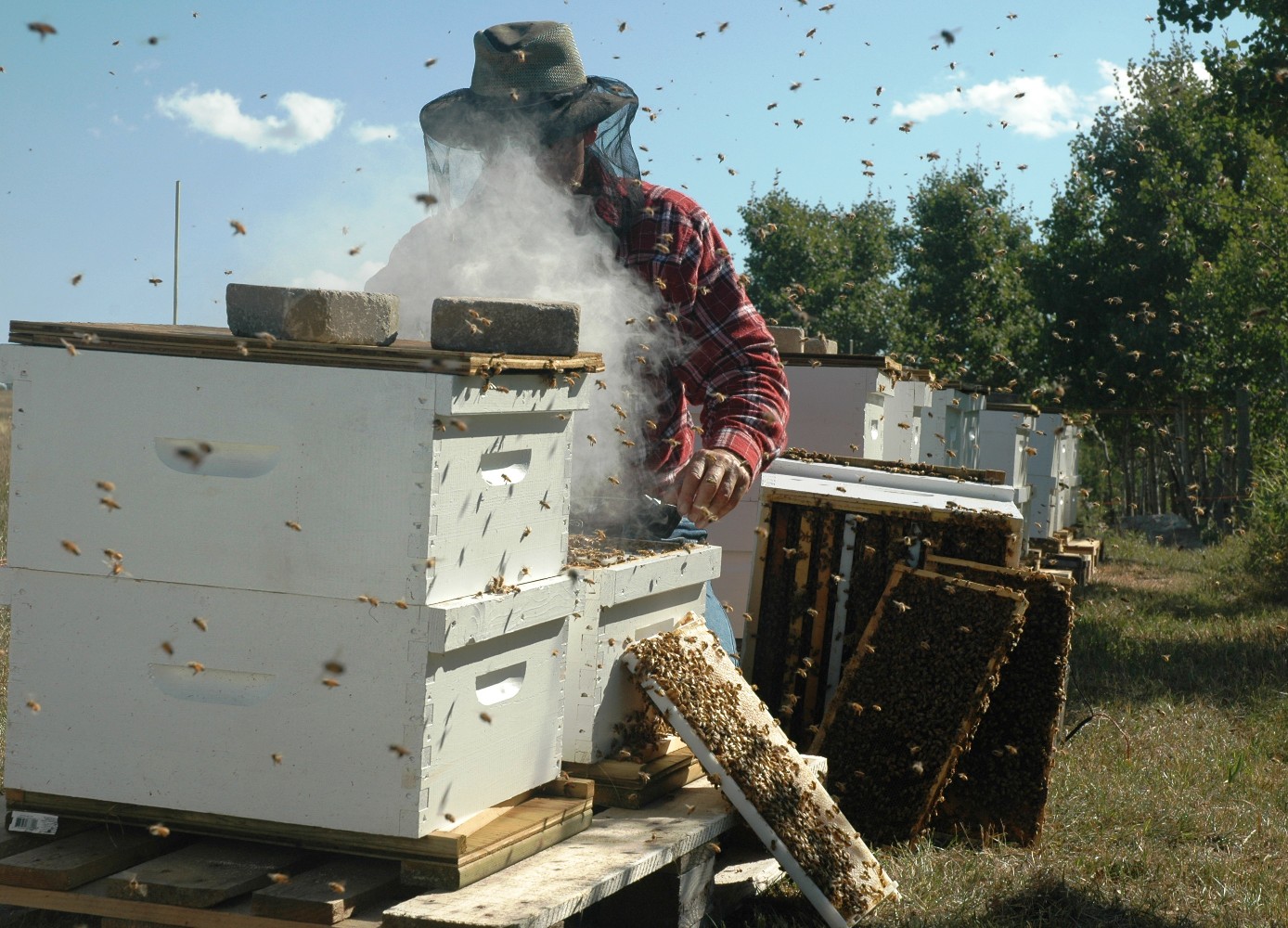
Before comparing systems, define your terms. “Treatment-free” is used in different ways, and unclear definitions make results almost meaningless.
Treated beekeeping
Treated beekeeping means using planned varroa control to keep mite levels below damaging levels. This may include:
- Licensed varroa treatments used according to the product label
- Autumn treatment after the main honey crop
- Winter oxalic acid treatment when colonies are broodless or near-broodless, where appropriate
- Integrated pest management, such as drone brood removal, brood breaks, shook swarms, queen replacement and monitoring-led decisions
- Rotation of treatment types where suitable to reduce resistance pressure
A treated approach does not have to mean treating blindly. Good treated beekeeping is usually monitoring-led, legal, timely and recorded.
Treatment-free beekeeping

Treatment-free beekeeping usually means avoiding routine chemical varroa treatments. Beekeepers may rely on:
- Local survivor stock
- Natural or beekeeper-led brood breaks
- Swarm-based reproduction
- Queen selection from colonies with low mite levels and good performance
- Culling or removing colonies that perform badly
- Non-chemical management such as drone brood removal, depending on the beekeeper’s definition
Some beekeepers who describe themselves as treatment-free will still use an emergency treatment to prevent colony collapse. Others will not. For a meaningful comparison, write down exactly what your treatment-free group will and will not receive.
The main questions your comparison should answer
A useful trial should answer practical questions, not just ideological ones.
Ask:
- Do treatment-free colonies overwinter as well as treated colonies on the same sites?
- Are mite levels stable, falling or rising through the season?
- Do any colonies show signs of varroa tolerance, such as consistently low mite counts without treatment?
- How do honey yields compare?
- Are brood pattern, queen performance and colony strength acceptable?
- Are treatment-free colonies contributing to high mite pressure, robbing or virus problems in the area?
- How many queens, nucs and colonies must be replaced each year?
- Does the labour and cost profile make sense for your beekeeping goals?
- Are disease risks being managed responsibly?
The aim is not to prove one side right. The aim is to find out what works in your locality, with your bees, forage, climate and neighbouring colony density.
Set up a fair comparison
Start with matched colonies
The best simple design is a matched comparison. Pair colonies that are as similar as possible at the start, then manage one as treated and one as treatment-free.
Match for:
- Colony strength
- Frames of bees
- Frames of brood
- Queen age
- Queen source or genetic background
- Stores
- Hive type and frame format
- Apiary location and forage access
Avoid comparing a strong young queen in one group with a weak older queen in the other. That tells you more about queen quality than treatment strategy.
If possible, randomise which colony in each pair becomes treated or treatment-free. Even a simple coin toss helps reduce bias.
Use enough colonies to see a pattern
One treated colony and one treatment-free colony is an anecdote. It may still teach you something, but it will not provide a reliable comparison.
For a serious trial, aim for:
- At least six matched pairs if you can manage them
- Ten or more pairs for stronger evidence
- More than one apiary if you want to test different local conditions
Many hobby beekeepers cannot spare that many colonies. If you start smaller, be honest about the limitation and avoid drawing sweeping conclusions.
Keep site conditions comparable
Colonies should experience similar forage, weather exposure and local mite pressure. If all treatment-free colonies are placed in one poor site and all treated colonies in a better site, the result will be biased.
Good practice includes:
- Using the same apiary where practical
- Balancing groups across stands and apiaries
- Avoiding obvious differences in shade, damp, wind exposure or forage access
- Recording any major site differences
Be aware that drift and robbing can move mites between colonies. That is not a reason to ignore the comparison, but it is a reason to monitor closely and use a rescue plan.
Agree an ethical rescue protocol before you start
This is the most important part of a treatment-free comparison. You need to decide in advance what will happen if a colony is failing.
A rescue protocol should define:
- What varroa results count as unacceptable for your trial
- What clinical signs require immediate action
- Whether emergency treatment is allowed in the treatment-free group
- Whether failing queens will be replaced
- When colonies will be united, requeened, treated or humanely destroyed
- How notifiable disease suspicions will be handled
- Who you will consult if there is doubt
Do this before the season begins. It prevents emotional, inconsistent decisions when a colony is collapsing in autumn or found weak in early spring.
A reasonable welfare-led protocol might say that a treatment-free colony will be removed from the trial and rescued if it has rapidly rising mite levels, severe virus symptoms, very poor adult bee population, failing brood and no realistic chance of recovery. If notifiable disease is suspected, the priority is legal reporting and inspector guidance, not the trial.
What to measure
Good comparisons rely on repeated measurements. A single inspection or one winter result can mislead. Record the same core information for every colony, every time.
Varroa monitoring
Varroa monitoring is the centre of the comparison. Without it, you are not comparing treatment systems; you are guessing.
Common methods include:
- Natural mite drop using a monitoring tray
- Sugar roll or sugar shake
- Alcohol wash
- Post-treatment mite drop in treated colonies
Each method has strengths and weaknesses. Natural mite drop is non-invasive but can be variable. Sugar roll avoids killing bees but can be inconsistent if technique varies. Alcohol wash is generally more accurate for phoretic mites but sacrifices the sampled bees. Post-treatment drop shows mite kill after treatment, but it is not the same as measuring the original infestation level.
Choose a method and use it consistently across both groups.
For natural mite drop:
- Leave the tray in for a fixed period, commonly three to seven days
- Count the mites
- Divide by the number of days to get an average daily drop
- Record dates, weather notes and whether brood is likely to be present
For sugar roll or alcohol wash:
- Use a consistent sample size, commonly around 300 bees
- Sample from the brood nest area, avoiding the queen
- Record the mite count and calculated percentage infestation
- Use the same method and timing across the trial
Useful timings include:
- Early spring, once colonies are building
- Before the main honey flow
- After the main honey flow
- Late summer or early autumn, before winter bees are raised
- After any treatment in the treated group
- During winter if using broodless oxalic acid treatment and monitoring drop
Trends matter more than isolated figures. A single moderate result is less informative than a steady rise across two or three checks.
Colony strength and brood quality
Record:
- Frames of bees
- Frames of sealed brood
- Area of open brood
- Brood pattern quality
- Queenright status
- Queen age and marking
- Signs of supersedure, queen failure or laying workers
Use simple, repeatable categories. For example, brood pattern might be recorded as good, acceptable, patchy or poor. The wording matters less than using it consistently.
Stores and honey yield
For each colony, record:
- Frames of stores during inspections
- Feeding given
- Supers added and removed
- Honey taken in kilograms
- Whether crop was removed before or after treatment
- Any colony excluded from honey yield because it was split, requeened or used for queen rearing
Honey yield can be distorted by swarming, queen loss and beekeeper decisions. Record those events so you do not compare a production colony with one deliberately split for increase.
Disease and abnormal signs
Record any signs of:
- Deformed wing virus
- Chronic bee paralysis-like symptoms
- Chalkbrood
- Sacbrood
- Dysentery or unusual adult bee symptoms
- Patchy brood
- Sunken, perforated or suspicious cappings
- Ropey larvae or abnormal brood smell
- Robbing, wasp pressure or drifting problems
American foulbrood and European foulbrood are notifiable diseases in the UK. If you suspect either, contact your local bee inspector and follow their instructions. Do not move equipment, unite colonies or attempt to “manage it out” without advice.
Photographs are extremely useful. In Bee Hive Tracker, attach photos to the inspection record so disease concerns can be reviewed later.
Temperament and handling
Treatment-free selection should not focus only on survival. A colony that survives but is dangerously defensive may not be suitable breeding stock, especially in gardens, allotments or urban apiaries.
Record:
- Temperament
- Following behaviour
- Stinging incidents
- Ease of inspection
- Propensity to rob
- Excessive running on comb
- Swarming tendency
A useful survivor colony should be healthy, manageable and productive, not merely alive.
Queen source and replacement
Record queen details carefully:
- Queen source
- Year of queen
- Whether locally mated, bought-in or grafted
- Whether from a survivor colony
- Requeening date
- Supersedure events
- Swarms, casts and splits
- Colonies used for queen cells or drone production
If your treatment-free programme depends on selection, queen records are essential. Without them, you cannot tell whether improvement came from local adaptation, a bought-in queen, a lucky swarm or a management change.
Using Bee Hive Tracker for the comparison
Bee Hive Tracker is most useful when it keeps the comparison consistent from hive to hive and season to season.
Set up each hive with a clear status, such as:
- Treated
- Treatment-free
- Hybrid or monitoring-led
For every inspection, record:
- Hive ID and apiary
- Inspection date
- Queen status
- Frames of bees
- Frames of brood
- Stores
- Varroa monitoring method and result
- Brood pattern
- Temperament
- Disease concerns
- Photos where useful
- Swarm or queen events
- Next action
For treated colonies, log:
- Product used
- Date applied
- Dose
- Batch number if relevant
- Treatment duration
- Removal date where applicable
- Honey withdrawal or super restrictions from the label
- Post-treatment mite drop
For treatment-free colonies, log:
- Reasons for remaining untreated
- Any brood break or manipulation
- Any rescue action
- Whether the colony stays in the trial or is removed from the treatment-free group
- Why the decision was made
These records make later analysis much easier. They also protect against hindsight bias, where a colony is remembered as “always strong” despite several recorded problems during the season.
Treated beekeeping: strengths and limitations
A well-run treated system usually aims to reduce mite levels before winter bees are raised. In the UK, this often means action after the main honey crop, followed where suitable by a winter treatment when brood is absent or reduced.
Advantages can include:
- More predictable overwintering
- Lower varroa and virus pressure when treatments work well
- Better chance of maintaining production colonies
- Reduced need for emergency colony replacement
- Clearer welfare safeguards
Limitations include:
- Cost of treatments
- Time needed for correct application and removal
- Legal requirement to follow product labels
- Honey crop restrictions and withdrawal periods
- Potential resistance problems if products are misused
- Risk of complacency if treatment replaces monitoring
Treated beekeeping still requires skill. A late, poorly timed or incorrectly applied treatment may fail to protect winter bees.
Treatment-free beekeeping: strengths and limitations
Treatment-free beekeeping aims to encourage colonies that can live with varroa and associated viruses without routine acaricides. In some places and breeding programmes, beekeepers have developed useful survivor lines. In other places, losses remain high.
Potential advantages include:
- Selection pressure for locally adapted bees
- Reduced use of chemical varroa treatments
- Lower direct spend on acaricides
- Strong focus on queen quality and colony genetics
- Potential long-term development of more resilient stock
Limitations include:
- Higher losses, especially in the early years
- Increased need for nucs, queens and spare equipment
- Risk of high mite and virus loads
- Possible impact on neighbouring colonies through drift and robbing
- More complex record keeping and selection decisions
- Slow progress over several seasons
- Risk of selecting only for survival while neglecting temperament, productivity or disease resistance
The most responsible treatment-free beekeepers are usually not passive. They monitor, select, cull poor breeding lines, maintain spare colonies and take disease risk seriously.
Hybrid and minimal-treatment systems
Many UK beekeepers use a middle path. They do not treat by the calendar alone, but they are not strictly treatment-free either.
A hybrid system may involve:
- Monitoring mite levels and treating only when thresholds are exceeded
- Using brood breaks before chemical treatment
- Treating only colonies with rising mite counts
- Selecting queens from low-mite colonies
- Using emergency treatments while breeding for improved tolerance
This can be compared as a third group. Label it clearly in your records so it is not confused with either fully treated or treatment-free management.
Interpreting varroa results
There is no single varroa number that makes sense in every colony at every time of year. Thresholds vary with season, brood level, colony strength, method used, local advice and your risk tolerance.
When interpreting results, look at:
- The time of year
- Whether winter bees are being raised
- Whether brood is present
- The direction of travel across repeated tests
- Clinical virus signs
- Colony strength
- Local mite pressure
- Recent robbing or collapsing colonies nearby
- Whether treatment has recently been applied
A treatment-free colony with consistently low mite readings, good brood, strong population and no virus signs is very different from one with a fast-rising mite count, deformed wings and dwindling bees.
Use National Bee Unit guidance, local association advice and your own rescue protocol when deciding action. The key is to make decisions from recorded evidence rather than hope.
Disease, neighbours and community responsibility
Varroa is not a statutory notifiable disease in the UK, but American foulbrood and European foulbrood are. Suspected notifiable disease must be reported to the local bee inspector.
Treatment-free beekeeping has a community dimension. A colony with high mite levels and virus symptoms can become a source of mites for nearby colonies, particularly when it weakens and is robbed. This matters in areas with many hobby apiaries, allotments or gardens.
Good practice includes:
- Telling nearby beekeepers if you are running a treatment-free trial
- Keeping the trial small at first
- Monitoring more often than you would in a standard treated system
- Acting promptly when colonies become mite reservoirs
- Not leaving dead-outs or collapsing colonies exposed to robbing
- Following bee inspector advice where disease is suspected
A comparison should never put the experiment ahead of bee welfare or responsible disease control.
Economics and labour
Treatment-free beekeeping can appear cheaper because fewer treatments are bought. That may be true in direct medicine costs, but it is not the whole calculation.
Record the full cost of each system:
- Varroa treatments
- Monitoring equipment
- Replacement queens
- Nucs bought or raised
- Frames and foundation
- Feed
- Lost colonies
- Labour for inspections
- Labour for emergency interventions
- Honey income
- Equipment tied up in spare colonies
- Travel between apiaries
Treated colonies often have more predictable costs. Treatment-free systems may have lower medicine costs but higher replacement, queen-rearing and monitoring costs, especially in the first few years.
What to expect over time
Years one and two
This is often the most difficult period for treatment-free colonies. If the bees are not already tolerant, mite levels may rise quickly and winter losses may be higher than in the treated group.
Expect to see:
- Greater variation between colonies
- More queen replacement
- More emergency decisions
- Lower average honey yield if colonies are weakened or split
- Clearer identification of poor breeding candidates
Do not assume one survivor proves success. Survival in one winter may be luck, low mite pressure or a favourable season.
Years three to five
If selection is working, you may begin to see patterns:
- Some survivor colonies maintain lower mite levels
- Certain queen lines perform better
- Colonies from selected stock may overwinter more reliably
- Honey yield may recover in the better lines
- Poor lines continue to fail or require removal
This is the stage where good records become valuable. You can compare queen families, apiaries and management decisions rather than simply counting dead colonies.
Year five onwards
A stable treatment-free or minimal-treatment programme, where it works, is usually local and long-term. It depends on genetics, mating area, forage, colony density, beekeeper discipline and willingness to remove unsuitable stock.
By this stage, you should know whether the approach is producing:
- Acceptable survival
- Stable mite levels
- Good temperament
- Reasonable honey crops
- Low disease incidence
- Manageable labour
- Responsible neighbour impact
If not, the honest conclusion may be that treatment-free management is not currently suitable for your bees or location.
A practical decision framework
Use your own local thresholds and advice, but the decision process should be written down.
For a treated colony:
- If mite levels rise above your action threshold, treat promptly with an appropriate licensed product or approved management method.
- If treatment does not reduce mite levels as expected, reassess application, timing, resistance risk and reinvasion.
- If brood disease is suspected, stop normal manipulation and contact the bee inspector.
For a treatment-free colony:
- If mite levels remain low and the colony is strong, continue monitoring.
- If mite levels rise but the colony is otherwise strong, consider whether your protocol allows a brood break, drone brood removal, requeening or removal from the breeding pool.
- If mite levels rise rapidly with virus signs or dwindling, apply the rescue protocol.
- If the colony needs emergency treatment, record it honestly and reclassify it if necessary.
- If notifiable disease is suspected, contact the bee inspector immediately.
For breeding decisions:
- Do not breed from colonies with high mite counts, poor temperament, repeated queen failure or poor brood health.
- Prioritise colonies that combine low mite levels, good brood, calm behaviour, winter survival and useful productivity.
Sample record fields
Use consistent labels in Bee Hive Tracker or your own spreadsheet. Useful fields include:
- Hive ID
- Apiary and stand
- Treatment status
- Queen source
- Queen year
- Inspection date
- Frames of bees
- Frames of sealed brood
- Open brood present
- Brood pattern quality
- Stores
- Supers on or off
- Honey removed in kilograms
- Varroa method
- Varroa result
- Natural mite drop date range
- Calculated daily mite drop
- Sugar roll or alcohol wash percentage
- Treatment product
- Treatment date
- Dose and duration
- Treatment removal date
- Disease signs
- Photos
- Temperament score
- Swarm cells or swarm event
- Requeening event
- Feeding
- Rescue action
- Reason for rescue action
- Next inspection date
- Notes
The most important habit is consistency. A simple record kept every time is better than a complicated system used only twice.
Analysing the results
Review results at the end of each season and again after winter.
Compare:
- Overwinter survival by group
- Average honey yield per production colony
- Mite trends through the season
- Number of colonies requiring rescue
- Number of queens replaced
- Number of colonies lost
- Disease incidents
- Temperament scores
- Labour and cost per surviving colony
- Colonies suitable for breeding
Be careful with small numbers. If you run four treatment-free colonies and two die, that is a 50% loss, but it is still a small dataset. Look for repeated trends over several seasons.
Success for a treatment-free group should mean more than survival. A credible result would include stable mite levels, acceptable winter survival, healthy brood, manageable temperament, reasonable productivity and no unacceptable disease risk to nearby colonies.
When to stop, change or expand the trial
Stop or rethink the treatment-free part of the trial if:
- Losses remain unacceptably high
- Colonies repeatedly show severe mite or virus symptoms
- Rescue actions are frequent
- Neighbouring colonies appear affected by mite pressure
- Disease risk cannot be managed responsibly
- You do not have enough spare colonies or queens to manage losses humanely
Continue cautiously if:
- Some lines show consistently low mite levels
- Winter survival improves over several seasons
- Temperament remains good
- Honey yield is acceptable
- Disease signs remain low
- Your local beekeeping community is not being put at avoidable risk
Expand only gradually. Use the best survivor colonies for queen rearing, but keep monitoring. A good year can hide a weak system.
Starting a comparison this season
If you want to begin now:
- Choose a small number of matched pairs.
- Define treated, treatment-free and hybrid categories clearly.
- Write your rescue protocol before the trial starts.
- Decide your varroa monitoring method.
- Record inspections in the same format every time.
- Keep treatment logs accurate and label-compliant.
- Weigh or record honey crop per colony.
- Photograph disease concerns.
- Review the results annually.
- Speak to your local association or mentor if results are unclear.
- Contact the local bee inspector immediately if notifiable disease is suspected.
A disciplined comparison may challenge your assumptions. That is the point. Treatment-free beekeeping can work in some circumstances, but it is not proven by belief alone. Treated beekeeping can be effective, but it should still be monitored and evaluated.
The best approach is the one that gives healthy colonies, responsible disease control, workable costs and honest records in your own setting.
Sources Used
- National Bee Unit / BeeBase guidance: https://secure.fera.defra.gov.uk/beebase/index.cfm
- British Beekeepers Association guidance and local branches: https://www.bbka.org.uk/