How to Do a Shook Swarm
A shook swarm is a drastic brood-removal method in which the adult bees, including the queen, are shaken from their old brood combs into clean equipment containing fresh foundation or clean drawn comb. The colony is forced to start again on new comb, while the old brood comb is removed from use.
Used well, a shook swarm can help with comb replacement, brood-cycle interruption, varroa management and, in some situations, swarm control. Used at the wrong time, or without enough food and follow-up checks, it can set a colony back badly or leave it queenless.
This is an advanced manipulation. If you are unsure whether the colony is diseased, queen-right or strong enough, pause and get advice from your local association mentor or the National Bee Unit.
What a shook swarm achieves
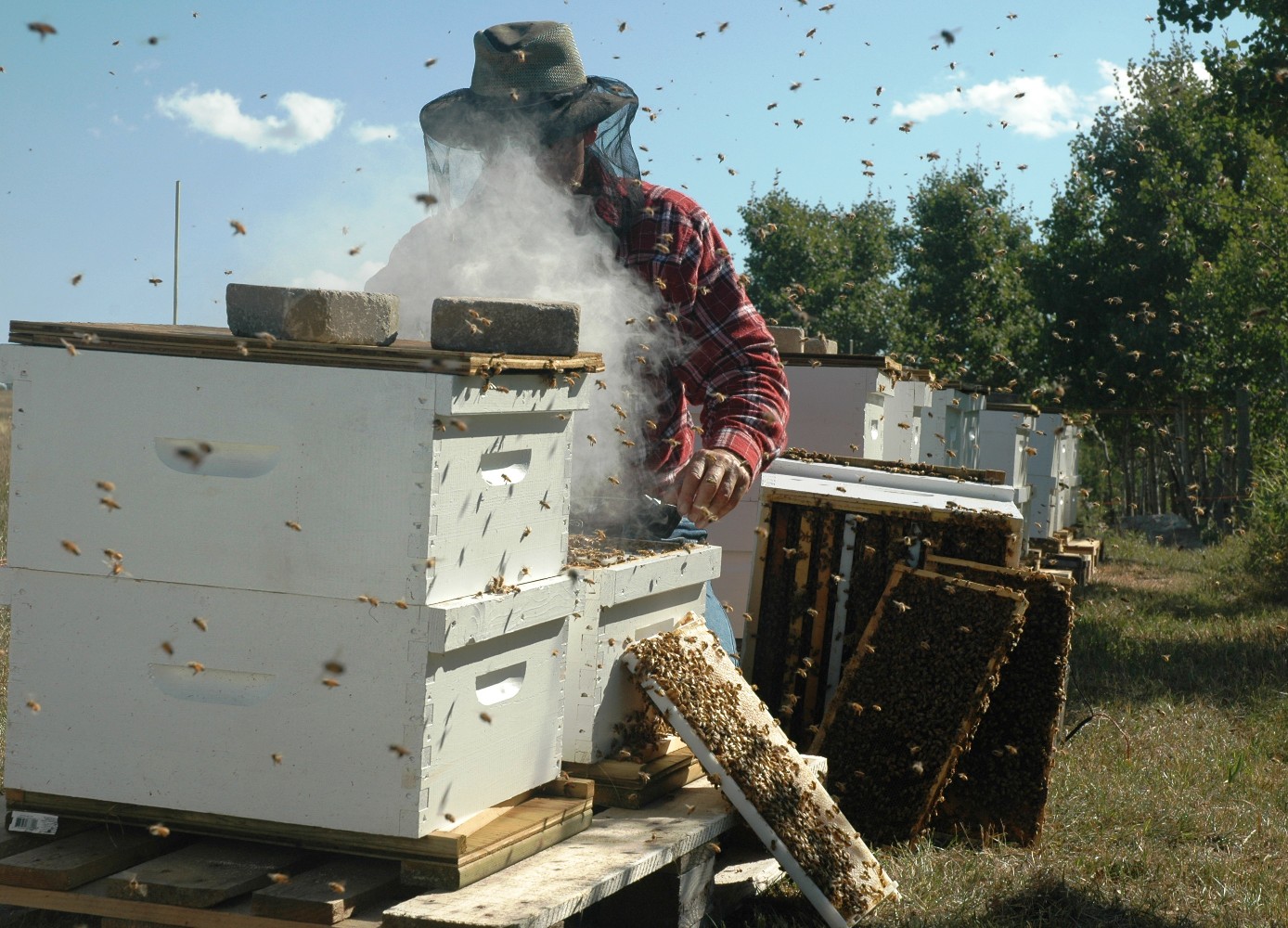
A shook swarm separates the adult bee population from the brood nest. That matters because brood comb is where several problems accumulate:
- Old, dark comb can hold pathogens, residues and heavy propolis contamination.
- Sealed brood provides the main breeding site for varroa mites.
- Congested brood frames can contribute to poor queen laying space and swarm preparation.
- Queen cells on old comb can continue the swarming process if they are not dealt with.
After a shook swarm, the queen must lay into newly drawn comb. There is a short period before new brood is sealed, which can be useful for integrated varroa management. However, a shook swarm does not remove all mites: many adult mites remain on the bees. Monitoring and, where appropriate, authorised treatment may still be needed.
When a shook swarm is useful

A shook swarm is not routine swarm control. It is a strong intervention for specific circumstances, such as:
- A strong, queen-right colony on very old comb that needs rapid comb replacement.
- A heavily congested colony where you want to remove brood and reset the nest.
- A colony with a high varroa burden where brood removal forms part of a wider control plan.
- A situation where an experienced beekeeper or bee inspector has advised comb replacement.
- Some cases of European foulbrood control, but only under official bee inspector direction.
For ordinary swarm control, an artificial swarm, nucleus split or Pagden-style manipulation is often less disruptive.
When not to do a shook swarm
Do not carry out a shook swarm if:
- You suspect American foulbrood, European foulbrood or another serious brood disease. Stop, close the hive and contact your local bee inspector.
- The colony is weak, short of bees or unable to draw new comb quickly.
- The weather is cold, wet or windy.
- There is no nectar flow and you cannot feed reliably.
- You cannot confirm the queen is present, especially if sealed queen cells suggest the old queen may already have left.
- The colony has very low stores and bad weather is forecast.
- You cannot return for follow-up inspections.
A shook swarm places immediate pressure on the colony. The bees must cluster, draw comb, feed the queen, rebuild stores and restart brood rearing. It is only suitable for a colony with enough adult bees to cope.
Best timing in the UK
The best time for a shook swarm in the UK is usually during the active spring build-up, when the colony is strong and the bees can draw foundation.
In most areas, suitable timing is:
- Late April to June in a normal season.
- Sometimes early July in a strong nectar flow.
- Daytime temperatures around 15°C or higher, with settled weather forecast.
- Ideally during a nectar flow, or when you are ready to feed syrup immediately.
Avoid doing it during a prolonged cold spell. Bees shaken onto foundation with no flying weather and no feed can starve quickly.
Equipment checklist
Prepare everything before opening the hive. You will need:
- A clean floor.
- A clean brood box.
- Clean brood frames with fresh foundation, or clean drawn comb if disease is not a concern.
- Crownboard and roof.
- Feeder, ideally an internal feeder to reduce robbing risk.
- Light syrup for feeding, or fondant for short emergency support.
- Smoker and hive tool.
- Queen cage or clip, if you are comfortable using one.
- Queen excluder to place temporarily under the brood box if there is a risk of absconding.
- Spare brood box or container for removed old frames.
- Bee brush, if needed.
- A plan for old comb disposal, freezing or secure storage.
- Clean gloves or sterilised tools if disease risk is part of the reason for the operation.
If you keep digital records, set up the hive record in Bee Hive Tracker before you start so the key details are not forgotten during the manipulation.
Disease and hygiene cautions
The point of a shook swarm is to move bees onto clean comb. Do not undermine that by transferring suspect comb, dirty equipment or contaminated stores into the new box.
If you see sunken cappings, ropiness, foul smell, patchy brood death, twisted larvae or anything that suggests foulbrood, stop. Do not shake bees, move frames to another apiary or give comb to another beekeeper. Contact the National Bee Unit or your local bee inspector and follow official instructions.
American foulbrood spores are not made safe by freezing. Burning, destruction and movement controls may be required under statutory disease procedures.
Step-by-step: how to perform a shook swarm
1. Choose the right day
Pick a warm, calm day with bees flying. Late morning to early afternoon is usually suitable because many foragers are out, but the colony still has time to settle before evening.
Allow enough time. Rushing a shook swarm increases the chance of losing the queen.
2. Prepare the new hive
Set up the clean floor, brood box and frames before opening the old colony.
Most beekeepers place the new hive on the original stand so flying bees return to it. If you put the new box a short distance away, expect some drifting and confusion; the old equipment must still be removed or closed so bees do not return to brood comb and queen cells.
A useful arrangement is:
- Clean floor on the original stand.
- Queen excluder above the floor for the first few days, especially if the bees are on foundation and may abscond.
- Clean brood box above the excluder.
- Frames of foundation, with a space left in the centre to shake bees into.
- Crownboard, feeder and roof ready to go.
Remove the queen excluder under the brood box after a few days once the colony is settled. Do not leave it in place indefinitely, as drones can become trapped.
3. Open the old hive and assess it
Use minimal smoke. Remove supers and set them aside, covered, to avoid robbing.
Check the brood box carefully before starting. Confirm:
- The colony is strong enough.
- The queen is present, if possible.
- There are no signs of notifiable brood disease.
- You understand why you are doing the shook swarm.
If you find sealed queen cells and cannot find the queen, be cautious. The old queen may already have swarmed. In that case, a shook swarm may leave you with a queenless box of adult bees.
4. Secure the queen if you find her
If you find the queen, the safest method is to cage or clip her temporarily and place her in the new box while you shake the bees. This prevents the most common failure: leaving the queen behind on old comb.
If you do not cage queens, shake the queen’s frame directly over the new brood box and watch that she goes in with the bees.
5. Shake the bees into the clean box
Work through the old brood box frame by frame.
For each frame:
- Hold it firmly over the new brood box.
- Give one or two sharp downward shakes so the bees drop into the box.
- Brush remaining bees gently if needed.
- Place the old frame into a separate box or sealed container, not back into the working hive.
Do not shake bees onto the ground if you can avoid it. Shake them into the new brood box so the queen and workers are contained and can cluster quickly.
Keep the operation methodical. The aim is to move adult bees, not brood comb.
6. Close and feed the new colony
Once the adult bees have been shaken in:
- Replace the missing frames carefully.
- Close the brood box.
- Add the feeder.
- Reduce the entrance if robbing is a risk.
- Feed syrup unless there is a reliable nectar flow and the bees have immediate access to sufficient food.
A shook swarm on foundation needs energy to draw wax. Feeding is often the difference between recovery and collapse.
7. Remove or secure the old brood comb
Do not leave the old brood box open in the apiary. It can cause robbing, spread disease, attract wasps and allow queen cells to emerge.
Your options depend on why you carried out the shook swarm:
- If disease is suspected: stop and follow bee inspector instructions.
- If comb is old but otherwise healthy: melt it down, dispose of it safely, or freeze it before processing for wax.
- If brood removal is being used for varroa management: keep removed brood sealed away from bees and manage it according to your plan.
- If you deliberately intend to save brood for a nucleus: understand that this is no longer a full shook swarm and you must manage queen cells, mites and disease risk separately.
Freezing helps kill wax moth and some pests, but it does not sterilise comb from foulbrood.
Aftercare after a shook swarm
The work is not finished when the hive is closed. The colony is at its most vulnerable during the next two weeks.
First 24–72 hours
Do not disturb the brood box unless there is an urgent problem. Watch from outside for:
- Bees settling and fanning at the entrance.
- Foragers returning to the new hive.
- Robbing or fighting at the entrance.
- Feed being taken.
- Bees clustering normally rather than spilling out or absconding.
Keep the entrance reduced if the colony is unsettled or if wasps and robbers are active.
Day 5–7
A very brief check may be useful if you are concerned about the queen or feed. If the colony is calm and taking feed, many beekeepers wait until day 7–10 before opening.
Look for:
- Drawn comb.
- Eggs.
- The queen, if easy to find.
- Adequate food.
Do not spend longer than necessary in the hive.
Day 7–10
This is the key first inspection. You want to see eggs or very young larvae. Eggs confirm that the queen is present and laying.
If there are no eggs:
- Check whether the queen is present.
- Consider whether she may need another few days if comb drawing was slow.
- If still queenless, act quickly by introducing a mated queen, uniting with another colony or taking advice from a mentor.
Do not leave a shaken colony queenless for long. It has no brood from which to raise a replacement unless you deliberately add a frame of eggs from another colony.
Day 14
By around two weeks, you should see larvae and a developing brood pattern. Check:
- Brood pattern.
- Comb drawing.
- Stores.
- Temperament.
- Space.
- Signs of disease.
- Whether further feeding is needed.
Weeks 3–4
By this point, new sealed brood should be present if the queen resumed laying promptly. This is also a sensible time to reassess varroa.
Use an appropriate monitoring method, such as a sticky board count or an alcohol wash/icing sugar roll where you are trained and comfortable. If treatment is required, use authorised products and follow the label exactly.
Feeding after a shook swarm
A shook swarm has no brood comb stores unless you provide them, and bees drawing foundation use large amounts of energy.
In practice:
- Feed promptly if there is no strong nectar flow.
- Use an internal feeder where possible to reduce robbing.
- Avoid spilling syrup around the hive.
- Keep the entrance reduced if robbing starts.
- Continue feeding until enough comb is drawn and the colony has adequate stores.
If supers are on the colony for honey production, think carefully before feeding syrup. In most shook swarm situations, supers are removed until the brood nest is re-established.
Varroa considerations
A shook swarm can reduce varroa pressure by removing mites reproducing in sealed brood. It also creates a short window before new brood is sealed.
However:
- It does not kill mites on adult bees.
- It is not a complete varroa treatment on its own.
- Mite levels can rebound.
- Removed brood may contain many mites and must be handled responsibly.
- Any follow-up treatment must be legal, suitable for the season and used according to the manufacturer’s instructions.
Record the reason for the shook swarm and the mite counts before and after. This helps you judge whether the manipulation worked rather than relying on assumption.
Common problems and what to do
No eggs after 7–10 days
The queen may have been left behind, injured or already absent before the shook swarm.
Check carefully for the queen. If she is missing, introduce a mated queen, unite with a queen-right colony or seek local advice. If you have another healthy colony, adding a test frame with eggs can help confirm queenlessness, but it will delay recovery.
Bees abscond
This is more likely if bees are shaken onto bare foundation, have little feed, are stressed by poor weather or the queen is not settled.
To reduce the risk:
- Use a queen excluder under the brood box for the first few days.
- Feed immediately.
- Avoid overheating the hive.
- Keep disturbance low after the operation.
Starvation
A shaken colony can starve quickly, especially during bad weather.
Signs include low activity, tight clustering, light hive weight and bees not expanding onto foundation. Feed immediately and check that the feeder is accessible.
Robbing
Robbing often follows manipulations involving exposed honey or weakened colonies.
Reduce the entrance, feed internally, close up gaps and remove exposed comb from the apiary. Avoid leaving old brood boxes or honey frames open.
Varroa levels remain high
A shook swarm reduces brood-associated mites but leaves phoretic mites on adult bees. Monitor and treat if needed using approved methods. Do not assume the colony is safe because brood was removed.
Colony fails to draw comb
This usually means poor nectar flow, insufficient feeding, weak bee numbers or cold weather.
Feed, reduce space if necessary, ensure the colony is warm enough and avoid repeated inspections. In some cases, adding one clean drawn comb can help the queen restart, provided disease risk is not the reason for the shook swarm.
What to record
Good records are essential because the first follow-up dates matter.
Record:
- Hive ID and apiary location.
- Date and time of the shook swarm.
- Weather and forage conditions.
- Reason for the manipulation.
- Queen status: seen, marked, clipped, caged, not seen.
- Whether queen cells were present.
- Number of frames shaken.
- Strength of the adult bee population.
- Type of new comb used: foundation or clean drawn comb.
- Feed given and quantity.
- What happened to the old brood comb.
- Whether a queen excluder was placed under the brood box and when it should be removed.
- Day 7–10 inspection result.
- Day 14 inspection result.
- Varroa monitoring results.
- Any treatment applied.
Bee Hive Tracker is useful here because you can log the shook swarm as a major management event, attach photos and schedule reminders for the day 7–10 and day 14 checks. Those reminders are particularly important if you manage several colonies and the season is busy.
Practical shook swarm timeline
Day 0
- Prepare clean hive and feeder.
- Confirm the colony is suitable.
- Find or secure the queen if possible.
- Shake adult bees into the clean brood box.
- Feed.
- Remove or secure old comb.
- Record the operation.
Days 1–3
- Avoid opening the hive.
- Watch entrance activity.
- Check feed levels from outside where possible.
- Watch for robbing or absconding.
- Remove any temporary under-brood queen excluder after the colony has settled.
Day 7–10
- Inspect briefly.
- Look for eggs and young larvae.
- Confirm feed and comb drawing.
- Record findings.
Day 14
- Check brood pattern.
- Assess stores and space.
- Continue feeding if needed.
Weeks 3–4
- Check for sealed brood.
- Monitor varroa.
- Add space if the colony is building strongly.
- Decide whether any authorised treatment is needed.
Weeks 4–6
- Reassess colony strength.
- Add supers only when the brood nest is established and feeding has stopped.
- Continue normal inspection records.
Alternatives to a shook swarm
A shook swarm is not always the best answer. Depending on the problem, consider:
- Artificial swarm for swarm control.
- Making up a nucleus colony.
- Bailey comb change for gradual comb replacement.
- Demaree manipulation for strong colonies.
- Timely supering and brood nest space management.
- Requeening if the colony is persistently swarmy or poor-tempered.
- Approved varroa treatment rather than relying on brood removal alone.
If the problem is notifiable disease, do not choose your own manipulation. Contact the appropriate inspector and follow official guidance.
Final checks before you begin
Before carrying out a shook swarm, ask yourself:
- Is the queen present?
- Is the colony strong enough?
- Is the weather warm and settled?
- Do I have clean equipment ready?
- Do I have feed ready?
- Do I have a safe plan for old brood comb?
- Have I ruled out notifiable disease?
- Can I inspect again in 7–10 days?
- Have I recorded the reason for doing it?
If the answer to any of these is no, delay the operation or choose a safer method.
Sources Used
- https://www.gov.uk/guidance/bee-health
- https://www.nationalbeeunit.com/
- https://www.bbka.org.uk/