How to Practise Low-Intervention Beekeeping
Low-intervention beekeeping means opening hives less often, disturbing the brood nest less, and making every manipulation count. It does not mean leaving colonies to fend for themselves regardless of Varroa, starvation, queen failure or notifiable disease.
A sound low-intervention system is built on three things: resilient colonies, purposeful inspections and accurate records. If you know the queen status, stores, brood condition, Varroa trend, treatment history and next planned action for every hive, you can avoid unnecessary openings without drifting into neglect. This is where a record-keeping tool such as Bee Hive Tracker is useful: it keeps the memory outside your head and tied to the individual hive.
What low-intervention beekeeping means in practice
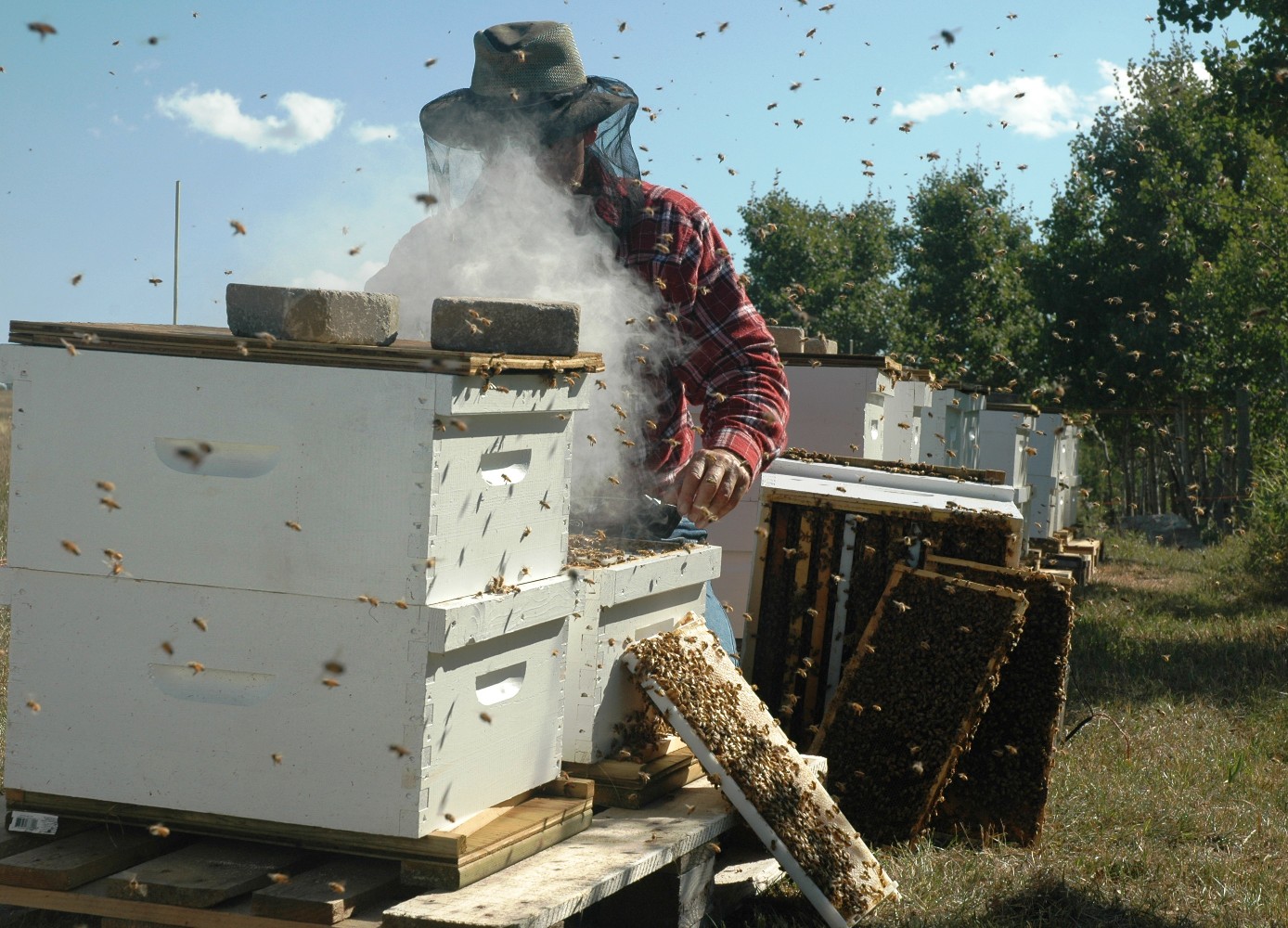
Low-intervention is deliberate minimal interference. It aims to support natural colony behaviour where it is safe to do so, while still meeting your responsibilities as a beekeeper.
In a UK apiary, that usually means:
- fewer routine inspections, especially in poor weather
- less rearranging of brood frames and boxes
- no opening “just to have a look”
- targeted feeding only when needed
- proactive but measured swarm management
- active Varroa monitoring and control
- rapid action on suspected disease
- careful records so decisions are based on evidence, not memory
Before changing your management, define your boundaries. Are you aiming for reduced inspections, reduced treatment, full integrated pest management, or a treatment-free approach? Most responsible UK beekeepers who practise low-intervention still use integrated pest management for Varroa, because mite pressure is shared across neighbouring colonies and unmanaged mite loads can affect more than one apiary.
Build an apiary that needs less handling
A well-set-up apiary reduces later intervention. Many “low-intervention” problems are really site, equipment or queen-quality problems.
Standardise your hive equipment
Use one main hive type across the apiary where possible. In the UK, National hives are common, but the principle applies equally to Commercials, WBCs, Langstroths or top-bar systems. Standardisation reduces time spent searching for compatible parts and makes manipulations quicker when they are necessary.
Good low-intervention equipment should include:
- sound, weatherproof boxes
- well-fitting crownboards
- enough spare supers and brood boxes before the flow begins
- entrance reducers or guards for weak colonies and robbing risk
- mouse guards ready for autumn
- a clear hive ID on every colony
- spare floors, roofs and feeders kept clean and ready
Number each hive visibly and use the same ID in your records. This sounds basic, but low-intervention management fails quickly if “the strong one by the hedge” becomes your only reference point.
Keep hives dry, sheltered and accessible
A colony that is cold, damp, exposed or hard to work will demand more attention. Choose apiary sites with:
- good forage within flying range
- shelter from prevailing wind
- winter sun where available
- reliable access after rain
- safe working space behind or beside the hives
- a nearby clean water source, or a water point you provide
Aim for a warm, dry hive rather than a draughty one. Insulation above the crownboard can help reduce condensation, especially in winter, but entrances must remain clear and the colony must be able to manage moisture. Avoid making repeated winter openings to “check” what can be assessed by weight, entrance activity and records.
Use queens suited to your aims
A good queen is one of the strongest tools in low-intervention beekeeping. Colonies with steady brood patterns, manageable temper, good overwintering ability and low swarming tendency are easier to manage with fewer openings.
Do not confuse low-intervention with tolerating failing queens. A poor queen often creates more work later: repeated checks, emergency feeding, disease uncertainty, laying worker risk or late-season requeening. If a colony is persistently aggressive, poorly laying or failing to build despite adequate conditions, requeening may be the lower-intervention decision in the long run.
Inspect with purpose, not habit
The main question before opening a hive should be: “What decision will this inspection help me make?”
If there is no likely decision, use external observation, hive weight, records, mite monitoring boards or a planned future inspection instead.
When to open the hive
Open when the result may change your action, such as:
- checking queenright status in spring
- assessing stores before poor weather or winter
- adding space before congestion causes swarming
- confirming swarm preparations during the main swarm season
- investigating suspected queen failure
- checking Varroa levels
- applying or checking a treatment
- investigating disease signs
- resolving robbing, starvation or severe weakness
Avoid opening during cold, wet or windy conditions unless welfare or disease risk makes it necessary. In spring, one poorly timed inspection can chill brood and set back a small colony.
A realistic UK inspection rhythm
Low-intervention does not mean one inspection per season. The rhythm changes with colony strength, weather, forage and swarm risk.
A sensible outline is:
- Winter: external checks only in most cases; assess weight by hefting or weighing; ensure entrances are clear.
- Early spring: confirm stores, queenright signs and colony strength when conditions are warm enough.
- Main swarm period, often April to June: inspect according to swarm risk. If preventing swarms is essential, colonies may still need checks every 7–10 days during peak risk. If your site can tolerate some natural swarming, your intervention level may be lower, but you still need a plan.
- Summer: check supers, stores and Varroa levels; avoid unnecessary brood-nest disruption.
- Late summer and early autumn: make Varroa treatment and feeding decisions promptly.
- Late autumn: prepare entrances, insulation and stores for winter; avoid disturbing the cluster.
- Broodless winter period: consider an authorised oxalic acid treatment if appropriate and label-compliant.
The point is not to follow the fewest possible inspections. The point is to inspect at the moments that matter.
How to inspect with less disturbance
A low-intervention inspection should be calm, short and structured.
Work in this order:
- Observe the entrance before opening.
- Check the hive record so you know what you are looking for.
- Use minimal smoke.
- Open gently and keep the brood nest covered where possible.
- Check space, stores, brood pattern and queen status without lifting every frame unless necessary.
- Take photos of anything uncertain.
- Record the decision before leaving the apiary.
You do not always need to find the queen. Eggs or young larvae usually confirm recent queen activity. However, if you are making a queen-specific decision, such as requeening, swarm control or queen caging, then finding her may be necessary.
Avoid repeatedly moving brood frames around. Bees maintain a brood nest structure for heat, pheromone communication and efficient care of larvae. If you must replace comb, do it gradually and deliberately rather than constantly rearranging frames.
Varroa control is not optional
Varroa destructor is the limiting factor in most UK low-intervention systems. A beekeeper can reduce disturbance, but cannot responsibly ignore mite levels.
Unmanaged Varroa can lead to colony collapse, deformed wing virus and reinvasion of neighbouring hives. Low-intervention beekeeping should therefore include reliable monitoring and timely action.
Monitor mites rather than guessing
Use at least one consistent monitoring method and record the result against the hive.
Common options include:
- Alcohol wash: accurate, but kills the sampled bees.
- Sugar roll: non-lethal when done well, though less reliable in damp conditions.
- Natural mite drop: useful for trend monitoring over several days, especially with an oiled inspection tray.
- Drone brood uncapping: helpful for seeing mite reproduction in drone cells, but not a full mite count.
For alcohol wash or sugar roll, many beekeepers use a sample of about 300 bees taken from brood frames, taking great care not to include the queen. Record mites per sample and convert to mites per 100 bees so results are comparable.
For natural mite drop, count over a defined period, commonly three to seven days, and record both the count and the number of days. A single 24-hour drop can be misleading.
When to treat
There is no one universal Varroa threshold that fits every colony, month and region. Treating decisions should consider:
- mite count and trend
- time of year
- colony strength
- presence of virus signs
- whether honey supers are on
- previous treatment history
- likely brood level
- local reinvasion risk
As a practical rule, rising mite levels in summer or late summer deserve prompt attention. Late treatment often means winter bees have already been damaged.
Use only authorised products and follow the current label. In the UK, Varroa treatment options may include products based on active ingredients such as oxalic acid, formic acid, thymol or amitraz, depending on season, brood status, temperature range, honey-super restrictions and current approval. Always check the product label, Veterinary Medicines Directorate information and National Bee Unit guidance before use.
Keep full medicine records, including product, active ingredient, batch number, dose, dates applied and removed, withdrawal period where relevant, and any follow-up mite monitoring. This is good beekeeping practice and especially important if honey enters the food chain.
Non-chemical Varroa tools
Low-intervention does not have to mean chemical-only or chemical-free. Integrated pest management combines monitoring, husbandry and treatments where needed.
Useful measures include:
- Drone brood removal: mites prefer drone brood, so removing dedicated drone comb can reduce reproduction. It must be timed and recorded.
- Brood breaks: splitting, queen caging or artificial swarming can interrupt mite reproduction, but these are active manipulations and must be planned carefully.
- Hygienic or locally adapted stock: useful over the long term, though not a substitute for monitoring.
- Avoiding weak colonies: chronically weak colonies are more vulnerable to mites, robbing and disease.
- Post-treatment checks: confirm that treatment worked rather than assuming it did.
Treatment-free beekeeping carries real risks in many UK settings. If you intend to attempt it, do so with clear monitoring, honest loss records, isolation where possible and consideration for neighbouring beekeepers.
Swarm management with minimal handling
Swarming is natural honey bee reproduction, but in managed beekeeping it can create nuisance, colony loss, queen loss and public concern. A low-intervention approach should decide in advance how much swarming is acceptable at your site.
Reduce swarm pressure early
Swarm prevention is usually less disruptive than emergency control.
Help colonies by:
- adding supers before they are congested
- ensuring the queen has laying space
- replacing failing or swarm-prone queens where appropriate
- avoiding brood-nest disruption that causes stress
- removing old comb gradually
- keeping strong colonies from becoming overcrowded
Do not rely solely on knocking down queen cells. Removing queen cells without addressing the swarm impulse often delays swarming only briefly and can leave a colony queenless if done carelessly.
Choose simple swarm-control methods
If you need to prevent swarms, use a method you can perform accurately and record clearly. Options include:
- artificial swarm
- nucleus split
- Demaree method
- vertical split
- queen removal into a nuc
- managed brood break
The lowest-intervention method is the one you can complete correctly in the fewest visits, not necessarily the one that sounds most natural.
Record queen cells seen, whether they were charged, queen status, frames moved, boxes moved and the next date by which action is required. Swarm management is one of the areas where missed dates cause the most problems.
Disease detection and legal responsibilities
Low-intervention beekeeping must never delay disease action. American foulbrood (AFB) and European foulbrood (EFB) are notifiable brood diseases in the UK. If you suspect either, contact the National Bee Unit or your local bee inspector promptly and follow official instructions.
Warning signs can include:
- sunken, perforated or greasy cappings
- patchy brood pattern
- dead larvae in unusual positions
- ropy larval remains
- scales in cells
- unpleasant or unusual smell
- larvae twisted, melted or discoloured
If you suspect foulbrood:
- Stop inspecting that colony.
- Do not move frames, bees, honey or equipment from the hive.
- Close the hive carefully.
- Clean or contain tools and gloves.
- Take clear photographs if this can be done without spreading material.
- Contact the bee inspector for advice.
Photos stored against the hive record can be extremely useful when asking for help from a mentor, association disease officer or bee inspector. Bee Hive Tracker can help keep those images tied to the correct colony and date.
Records make low-intervention possible
Good records are not paperwork for its own sake. They are what allow you to open fewer hives.
Without records, you end up opening colonies to answer questions you already answered last month: Was this queen clipped? Did this hive have high mites? Did I feed it? Was the brood patchy before? When does the treatment come off?
Minimum records for each inspection
For every hive visit, record:
- hive ID
- apiary location
- date
- inspector
- weather if relevant
- queen status
- queen age, marking or clipping if known
- eggs, larvae and sealed brood
- brood pattern
- signs of queen cells
- colony strength
- stores level
- temperament
- Varroa monitoring method and result
- treatments applied or removed
- feed given
- disease or pest concerns
- photographs taken
- action completed
- next action and date
For treatments, add batch number, dose, expiry date where relevant, withdrawal restrictions and follow-up monitoring results.
Example field record
Hive 12A — 14 July 2025 — North apiary
- Queen: seen, unmarked, laying well.
- Brood: five central frames with good pattern; no suspicious brood.
- Queen cells: none charged.
- Stores: moderate; nectar coming in; two shallow supers on.
- Varroa: sugar roll, about 300 bees, 8 mites. Result recorded as 2.7 mites per 100 bees. Recheck in four weeks unless virus signs appear.
- Temperament: calm.
- Action: add another super before weekend if flow continues.
- Photo: brood frame attached.
- Next check: by 11 August, earlier if supers fill or stores fall.
A concise record like this prevents repeat inspections and makes seasonal review much easier.
Using Bee Hive Tracker for low-intervention management
Digital hive records suit low-intervention beekeeping because they keep the detail accessible at the hive stand. Bee Hive Tracker can be used to store photos, Varroa counts, treatment history, queen notes and next-action reminders for each colony.
The most useful habit is to record the next decision before leaving the apiary. For example: “Check treatment removal date”, “Heft in two weeks”, “Inspect for queen-right status after split”, or “Recheck mite count after treatment”. That reminder may save an unnecessary full inspection later.
A UK seasonal checklist for low-intervention beekeeping

Winter: December to February
- Avoid internal inspections unless there is a clear welfare or disease reason.
- Heft or weigh hives to assess stores.
- Check entrances are clear after storms, snow or dead bee build-up.
- Ensure mouse guards are secure.
- Watch for woodpecker damage where relevant.
- Record weight impressions and any emergency fondant given.
Early spring: March to April
- Inspect only when weather is warm enough and bees are flying well.
- Confirm queenright signs, brood area, stores and colony strength.
- Feed if stores are low and forage is not yet reliable.
- Begin Varroa monitoring if conditions allow.
- Remove or adjust winter protection as appropriate.
- Mark colonies needing queen attention.
Late spring and swarm season: April to June
- Add space before congestion.
- Monitor queen cells according to your swarm-control policy.
- Use planned swarm-control methods rather than repeated panic inspections.
- Record charged queen cells and all manipulations accurately.
- Consider drone brood removal if it forms part of your Varroa plan.
Summer: July
- Check honey supers and add or remove space as needed.
- Harvest only genuine surplus.
- Monitor Varroa before late-summer decisions.
- Watch for queen failure after swarming or splits.
- Avoid unnecessary brood comb removal.
Late summer and early autumn: August to September
- Treat Varroa promptly if monitoring indicates action.
- Follow product labels, especially temperature ranges and honey-super restrictions.
- Feed colonies that need winter stores.
- Unite weak colonies where appropriate rather than nursing hopeless units into winter.
- Record all treatment and feeding details.
Autumn: October to November
- Confirm colonies are queenright as far as practical without over-opening.
- Reduce entrances against robbing and mice.
- Check hive weight.
- Set winter insulation and ventilation arrangements.
- Remove unused equipment that creates dead space.
- Keep records of final winter preparation.
Broodless period: late autumn to mid-winter
- If appropriate, use an authorised oxalic acid product during a broodless period, strictly according to the label.
- Wear suitable protective equipment.
- Record product, dose, date and follow-up mite drop.
- Avoid repeated disturbance of the winter cluster.
Common low-intervention judgement calls
Patchy brood but no disease signs
Do not rush to requeen after one poor-looking inspection. Patchy brood can follow a swarm, poor weather, nectar gaps, a newly mated queen or recovery from stress.
Photograph the brood, record the context and recheck at a sensible interval, often two to four weeks depending on season. If the pattern remains poor, the colony weakens or disease signs appear, investigate further.
High mite count but the colony looks healthy
Treat. Colonies can look strong while mite levels are already damaging the next generation of bees. Waiting for visible deformed wings or collapse is too late. Apply an appropriate authorised treatment, record it properly and monitor afterwards.
Light hive in winter
Feed. Low-intervention is not a test of how little help a colony can survive. If a hive is light, use fondant in cold weather or syrup when conditions and season make syrup appropriate. Record what was given and when.
Aggressive colony
First consider weather, queenlessness, robbing, wasps, handling and forage conditions. If the colony remains persistently aggressive, requeen from calmer stock. A defensive colony causes more disturbance because every visit becomes difficult and prolonged.
Suspected AFB or EFB
This is not a moment for minimalism. Stop, isolate, photograph if safe, and contact the bee inspector. Fast reporting protects your bees and other beekeepers.
Tools for a low-intervention apiary
A simple, consistent kit helps inspections stay short.
Useful items include:
- clean hive tool
- smoker and spare fuel
- queen marking kit
- spare queen cage
- notebook or phone record system
- camera or phone for photographs
- mite monitoring kit
- inspection tray
- weighing scale or luggage scale if using hive weights
- spare entrance reducers
- clean feeder
- disposable gloves or means to clean gloves between colonies
- container for suspect comb or debris if advised by an inspector
Keep disease hygiene in mind. Clean tools between apiaries and take extra care after inspecting weak, suspect or robbed colonies.
How to start moving towards low-intervention beekeeping
Do not change everything at once. Trial the approach on a small number of colonies for one full season.
Start with these steps:
- Give every hive a clear ID.
- Create a baseline record for queen age, colony strength, stores, brood pattern and last Varroa treatment.
- Decide your inspection triggers.
- Choose your Varroa monitoring method and schedule.
- Prepare swarm-control equipment before spring.
- Record every action and next action.
- Review results at the end of the season.
Compare colonies honestly. Which thrived with less disturbance? Which needed more support? Which queens produced calm, resilient bees? Low-intervention beekeeping improves over several seasons as your records reveal patterns.
If you are reducing treatments or changing Varroa strategy, speak with nearby beekeepers where possible. Mites and drifting bees do not respect apiary boundaries.
Final practical checklist
- Standardise hive equipment where possible.
- Mark every hive with a clear ID.
- Open only with a purpose.
- Keep brood-nest disturbance to a minimum.
- Monitor Varroa reliably and act on results.
- Use authorised treatments according to the current label.
- Keep full treatment and inspection records.
- Respond quickly to suspected AFB or EFB.
- Feed colonies at risk of starvation.
- Replace failing or persistently difficult queens.
- Manage swarming according to your site and neighbours.
- Use photos and reminders to reduce repeat inspections.
- Review each season and refine your approach.
Low-intervention beekeeping is not passive beekeeping. It is disciplined, observant and evidence-led. Done well, it reduces stress on the bees, saves unnecessary work and keeps welfare, disease control and neighbour responsibility at the centre of the apiary.
Sources Used
- National Bee Unit and BeeBase guidance on foulbrood, Varroa and good husbandry.
- APHA and UK bee inspector guidance on notifiable disease reporting.
- Veterinary Medicines Directorate and current product labels for authorised Varroa treatments.
- Standard UK beekeeping practice and local association guidance, including BBKA-affiliated training and mentoring.