How to Tell If Bees Are Angry
Bees are not “angry” in the human sense. In beekeeping, the useful term is defensive. A defensive colony is responding to a threat, stress, disturbance, robbing pressure, poor weather, queen problems, genetics or disease.
You can tell bees are becoming defensive by watching their flight, sound and response to you. Clear warning signs include louder, sharper buzzing, more guards at the entrance, bees flying fast and directly at your veil, repeated stinging attempts, bees following you away from the hive, and a colony that does not settle with calm handling and sensible use of smoke.
The key is to read the signs early, stop before the situation escalates, and record what happened. A simple note in Bee Hive Tracker or your inspection record — weather, hive ID, temperament, possible trigger and next action — makes future decisions far safer.
Quick signs that bees are becoming defensive

Look for a combination of signs, not just one bee behaving badly.
Common warning signs include:
- More guard bees than usual at the entrance
- Bees flying directly at your face, veil or hands
- A sudden rise in volume or a sharper tone from the colony
- Bees bouncing off your veil or clothing
- Bees attempting to sting gloves, sleeves or veil
- Stings left in gloves or clothing
- Bees following you several metres from the hive
- Bees pouring out when the hive is opened
- Little improvement after a light, appropriate use of smoke
- A rapid spread of alarm behaviour through the colony
A few curious bees investigating you is normal. Bees that repeatedly target you, sting, and recruit more defenders are a different matter.
What defensive bees actually do
Entrance behaviour
The entrance is often the best place to judge a colony before opening it.
A calm colony usually has purposeful traffic: foragers leaving, pollen coming in, and bees landing without much conflict. A defensive colony may show:
- Guards standing alert at the entrance
- Bees facing outwards, watching movement nearby
- Fast, low flights towards you as you approach
- Bees launching from the entrance and returning repeatedly
- Fighting at the entrance, often linked to robbing or wasp pressure
Do not confuse a busy nectar flow with aggression. A strong colony on a good flow may look intense, but the bees are usually focused on flying, not attacking. Defensive bees change direction towards you.
Flight around you
Aggressive or defensive flight is direct. Bees will often fly at your veil, eyes, hands or wrists. They may bounce off you, circle tightly, and return again after being brushed away.
A few bees following for a short distance is common after an inspection. Bees that follow persistently across the apiary, or towards paths, gardens or livestock, should be treated as a serious warning.
Sound from the hive
Experienced beekeepers often notice the sound before anything else. A defensive colony may produce a sharper, louder, more urgent buzz. The tone can rise suddenly when the roof or crown board is removed.
Sound alone is not enough to diagnose temperament. A queenless colony, a cold colony, a colony being robbed, or a hive disturbed by vibration may also sound unsettled. Use sound alongside the other signs.
Response to smoke
Smoke does not make bees “happy”; it helps mask alarm pheromones and encourages bees to move away from the area being worked. A normal colony will often settle after a light puff at the entrance or under the crown board, followed by a short wait.
A highly defensive colony may not settle. If bees continue to rush out, sting, or fly hard at your veil after calm handling and light smoke, do not push on with a full inspection.
Avoid over-smoking. Too much smoke can make a colony runny, distressed and harder to inspect.
Stinging and alarm pheromone
A sting is not just a sting. When a honey bee stings, alarm pheromone is released, which can attract other defenders to the same spot. This is why repeated stings on gloves, cuffs or the veil can quickly escalate.
If bees are targeting one area:
- Move slowly away from the hive
- Remove the sting if it is in skin
- Cover or replace heavily stung gloves if safe to do so
- Avoid crushing bees, as this can intensify alarm
- Close the colony if behaviour is worsening
The smell often described as bananas is associated with honey bee alarm pheromone.
Behaviour inside the hive
Once the hive is open, a defensive colony may show:
- Bees rushing across the top bars towards your hands
- Bees flying straight up at your veil when frames are moved
- Bees biting or clinging to gloves
- A large number of bees leaving the comb to attack
- Bees becoming more defensive with every frame lifted
By contrast, a calm colony usually remains on the comb, with bees moving aside as frames are handled.
How to approach a colony safely
Check conditions before you open
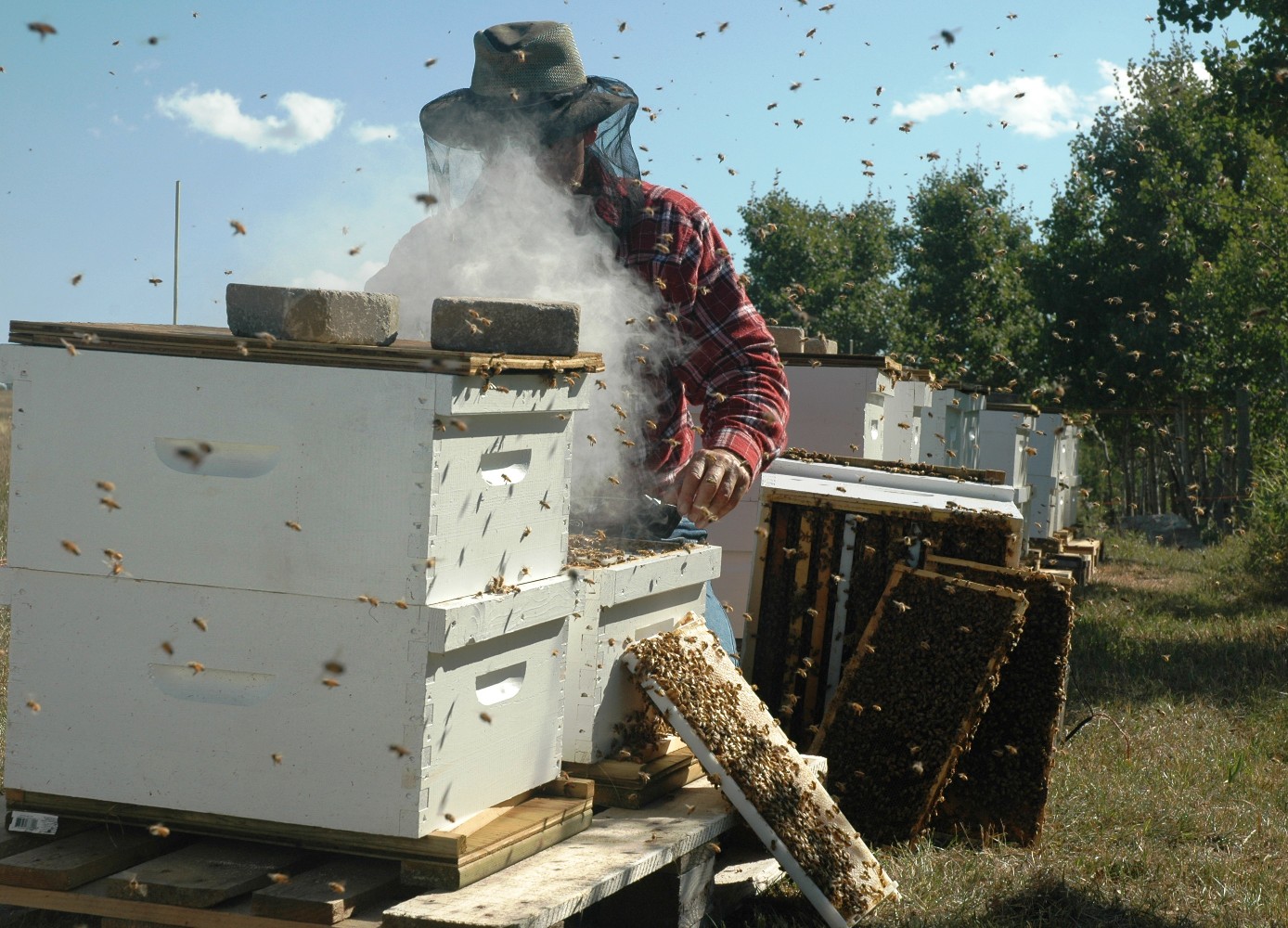
Many bad inspections start before the roof comes off. Bees are more likely to be defensive when conditions are poor.
Avoid unnecessary inspections when it is:
- Cold
- Wet
- Windy
- Thundery
- Late in the day
- During a nectar dearth
- During active robbing or wasp pressure
In much of the UK, colonies can be more difficult during late summer and autumn when forage reduces and wasps are active. Spring colonies can also become defensive if they are crowded, queenless, disturbed during poor weather, or building rapidly with limited space.
Observe from a distance first
Stand 3–5 metres away and watch the entrance before touching the hive. Look for:
- Normal foraging traffic
- Pollen being carried in
- Fighting at the entrance
- Bees checking you out from a distance
- Wasps, hornets or robbing bees
- Dead bees or unusual debris
This short observation often tells you whether the inspection should go ahead.
Approach calmly
Move slowly and avoid standing directly in the flight path for longer than necessary. Wear suitable protection for the colony you are working: veil secure, suit zipped properly, gloves appropriate for the risk, and boots or trouser closures sealed if needed.
Have everything ready before opening:
- Lit smoker with enough fuel
- Hive tool
- Spare equipment
- Queen cage or marking kit if relevant
- Entrance reducer if robbing is suspected
- A plan for what you need to check
Do not open a defensive colony casually “just to have a look”.
Use a small test before committing
If the entrance looks tense, give a light puff of smoke at the entrance and wait about a minute. Watch whether the bees settle or become more agitated.
When opening, use minimal disturbance:
- Remove the roof gently.
- Apply a small amount of smoke under the crown board if needed.
- Wait briefly.
- Lift the crown board carefully.
- Assess the bees before removing frames.
If bees immediately pour out, hit the veil, sting repeatedly or ignore sensible smoke, close up.
Why bees become defensive
Weather and timing
Weather is one of the simplest explanations. Bees often tolerate handling better on warm, settled days when flying bees are out foraging. They are usually less tolerant when confined by poor weather.
Inspections are generally best carried out:
- In the warmest suitable part of the day
- In dry, settled weather
- When there is good flying activity
- When you have enough time to work calmly
Do not inspect simply because your schedule says so. The bees and weather may disagree.
Nectar dearth, robbing and wasps
Late summer and early autumn are common times for defensive behaviour in UK apiaries. When nectar is scarce, colonies defend stores more strongly. Robbing can make a hive appear suddenly aggressive.
Signs of robbing include:
- Fighting at the entrance
- Bees trying to enter cracks or under roofs
- Ragged, darting flight around the hive
- Wax debris at the entrance
- A frantic sound from the colony
- Wasps repeatedly testing the entrance
If robbing is occurring, stop inspections, reduce entrances, avoid spilling syrup, remove exposed honey, and close gaps.
Queen problems
Queenless colonies can become unsettled, noisy and defensive. Colonies with a failing queen or poor brood pattern may also behave badly.
Possible signs include:
- A roar or unsettled sound when opened
- Lack of eggs or young larvae
- Emergency queen cells
- Patchy brood
- Bees running more than usual
- Defensive behaviour that appears suddenly without another clear cause
Confirm queen status carefully. Do not assume aggression alone means queenlessness.
Genetics and temperament
Some colonies are consistently more defensive because of genetics. This is one of the most important reasons to keep temperament records.
Record:
- Queen source
- Queen age
- Colony temperament at each inspection
- Whether defensiveness is seasonal or constant
- Whether daughter colonies show the same pattern
If a colony is repeatedly aggressive in good weather, without robbing or disease pressure, requeening with calmer stock is often the best long-term answer.
Crowding and management stress
A congested hive can become difficult to handle, especially during rapid spring expansion. Bees may also react badly to repeated disruption.
Common management causes include:
- Lack of space in the brood box
- Supers added too late
- Poor ventilation
- Repeated inspections without a clear purpose
- Rough handling
- Frames rolled or crushed during inspection
- Hive moved recently
- Frequent disturbance by livestock, machinery or people
Good handling reduces defensiveness. Smooth frame movement, minimal crushing, and shorter inspections matter.
Pests, disease and abnormal colony condition
Colonies under stress from pests or disease may become more defensive. Watch for:
- Unusual brood patterns
- Sunken, perforated or greasy-looking cappings
- Foul smells
- Large numbers of dead or dying bees
- Deformed wings
- Heavy varroa signs
- Persistent wasp or hornet pressure
If you suspect notifiable disease such as American foulbrood or European foulbrood, stop work, avoid moving equipment, and contact your local bee inspector or the National Bee Unit through BeeBase.
Grading colony temperament
A simple grading system helps you make consistent decisions. Record the grade after each inspection, especially when behaviour changes.
Low: calm
Signs:
- Normal entrance activity
- Bees remain mostly on the comb
- Little reaction to slow handling
- Settles with little or no smoke
Action:
- Continue normal inspection
- Record as calm or low defensiveness
Moderate: alert but workable
Signs:
- More guards than usual
- Louder buzzing
- Occasional bees at the veil
- One or two stinging attempts if handled clumsily
- Settles with careful handling and light smoke
Action:
- Keep inspection short
- Avoid unnecessary frame handling
- Record likely trigger, such as weather, crowding or nectar dearth
High: defensive
Signs:
- Repeated bees at the veil
- Several stings on gloves or clothing
- Bees rushing from frames
- Bees following after you step away
- Poor response to calm handling
Action:
- Close the hive
- Leave non-urgent tasks
- Reassess conditions and cause
- Plan the next visit carefully
- Consider requeening if repeated
Extreme: dangerous
Signs:
- Bees following a long distance
- Multiple stings
- Public, neighbours, livestock or pets at risk
- Colony cannot be safely inspected
- Behaviour repeated across visits in otherwise good conditions
Action:
- Withdraw and secure the area
- Warn anyone nearby if needed
- Do not reopen alone
- Seek help from an experienced beekeeper, mentor or bee inspector as appropriate
- Plan requeening, moving, or other corrective action only when it can be done safely
What to record after a defensive inspection
Do not try to type notes while bees are still following you. Get safe first, then record the details while they are fresh.
Useful fields for Bee Hive Tracker or your notebook include:
- Hive ID
- Apiary location
- Date and time
- Weather and temperature
- Forage conditions
- Temperament grade
- Entrance behaviour
- Behaviour during opening
- Stings or following distance
- Possible trigger
- Action taken
- Next planned action
- Queen age and origin
- Whether requeening is being considered
A single defensive inspection does not prove a colony is bad-tempered. A pattern over several inspections is far more useful.
How to calm or manage defensive bees
If the colony is only mildly defensive
If the bees are alert but workable:
- Slow down
- Use light smoke, then wait
- Keep movements smooth
- Avoid knocking frames
- Do only the necessary checks
- Close the hive sooner than planned
- Return in better conditions if needed
A shorter inspection is often better than forcing a complete one.
If robbing is involved
If the aggression is linked to robbing:
- Stop opening colonies
- Reduce the entrance
- Close gaps and poorly fitting parts
- Avoid feeding in the open
- Do not leave wet supers or honey frames exposed
- Clean up spilled syrup or honey
- Feed only if necessary and in a way that does not trigger more robbing
Robbing can spread quickly through an apiary, so act promptly.
If the colony is crowded
If crowding appears to be the cause:
- Add space when conditions allow
- Super in good time during nectar flows
- Check whether the brood nest is blocked with stores
- Consider swarm control if queen cells and congestion are present
- Improve ventilation if the hive is damp or poorly arranged
Do not attempt major manipulation while the colony is at peak defensiveness unless it is necessary and safe.
If the temperament is consistently poor
For colonies that are repeatedly defensive in good conditions, requeening is usually the main solution.
Options include:
- Introducing a mated queen from calmer stock
- Making up a nuc with selected calm bees and replacing the queen
- Splitting or moving the colony only if safe and appropriate
- Getting help from a more experienced beekeeper for the operation
After requeening, temperament may take several weeks to improve as older workers are replaced by daughters of the new queen. Record the date of requeening and compare behaviour over time.
What not to do
Avoid these common mistakes:
- Do not keep opening a colony that is escalating
- Do not inspect in poor weather unless essential
- Do not crush bees unnecessarily
- Do not stand in front of the entrance for long periods
- Do not leave honey, syrup or wet supers exposed
- Do not assume smoke will solve serious aggression
- Do not ignore bees following beyond the apiary
- Do not keep breeding from defensive colonies
- Do not move suspect disease material between hives
Defensive behaviour is information. Treat it as a sign to reassess, not a challenge to push through.
When to get help
Get help if:
- The colony is repeatedly highly defensive
- Bees are putting neighbours, paths, gardens, livestock or pets at risk
- You are not confident requeening a difficult colony
- You suspect American foulbrood, European foulbrood or another serious disease
- You see unusual brood signs, foul smells or unexplained colony decline
- Hornets, wasps or robbing are beyond your control
- You or someone nearby has a serious reaction to stings
For suspected anaphylaxis, call 999 immediately. Warning signs include breathing difficulty, swelling of the lips or throat, dizziness, collapse, widespread rash, or confusion.
For suspected notifiable bee disease in England and Wales, contact the National Bee Unit through BeeBase or your local bee inspector. In Scotland and Northern Ireland, follow the relevant local bee health arrangements.
Practical examples
A colony becomes sharp during poor weather
A colony that was calm the previous week becomes noisy, jumpy and quick to sting on a cool, windy day. There is no sign of disease or robbing.
Best action: close up, record the change, and return in settled weather. Do not label the colony aggressive based on one badly timed inspection.
Bees fight at the entrance in late summer
There is frantic flight around the entrance, bees are wrestling, wasps are present, and the colony reacts strongly when approached.
Best action: do not open the hive. Reduce the entrance, remove exposed honey or syrup, check for gaps, and record “suspected robbing/wasp pressure”. Reassess when activity has settled.
A colony is defensive at every inspection
The colony follows, stings gloves, and rushes from frames even in warm, settled weather with good forage. Nearby colonies are calm.
Best action: record repeated high defensiveness, avoid breeding from that queen, and plan requeening with calmer stock. Get help if the colony is unsafe to handle.
A noisy colony has no eggs
The colony sounds unsettled and behaves defensively. On a careful inspection, there are no eggs or young larvae, and emergency queen cells are present.
Best action: treat queen status as the likely issue, confirm the situation, and decide whether to unite, introduce a queen, or allow requeening depending on season and colony condition.
Final checklist before opening a hive
Before you inspect, ask:
- Is the weather suitable?
- Is there normal flying activity?
- Are bees fighting or robbing?
- Are wasps or hornets pressuring the entrance?
- Do I have a clear reason to open the hive?
- Is my smoker lit and reliable?
- Am I properly protected?
- Can I close up quickly if behaviour changes?
- Have I checked previous temperament records?
If the answer to several of these is poor, delay the inspection unless it is urgent.
Sources Used
- https://www.bbka.org.uk/ British Beekeepers Association
- https://www.gov.uk/guidance/bee-health UK Government bee health guidance
- https://secure.fera.defra.gov.uk/beebase/index.cfm BeeBase / National Bee Unit
- Local beekeeping association advice, regional mentors and bee inspectors