How to Keep Bees Cool in Hot Weather
Hot weather management is mostly about four things: shade, water, airflow and minimal disturbance. In a UK heatwave, most healthy colonies cope well if they have a reliable shallow water source, protection from strong afternoon sun, enough space in the hive and sensible ventilation. Your job is to reduce avoidable stress without constantly opening the colony to “check”.
Keep clear records of what you changed and how each colony responded. A note in Bee Hive Tracker, or in your inspection book, will help you spot which hives need better siting, lighter roofs or different summer management next year.
Why hot weather matters to honey bees
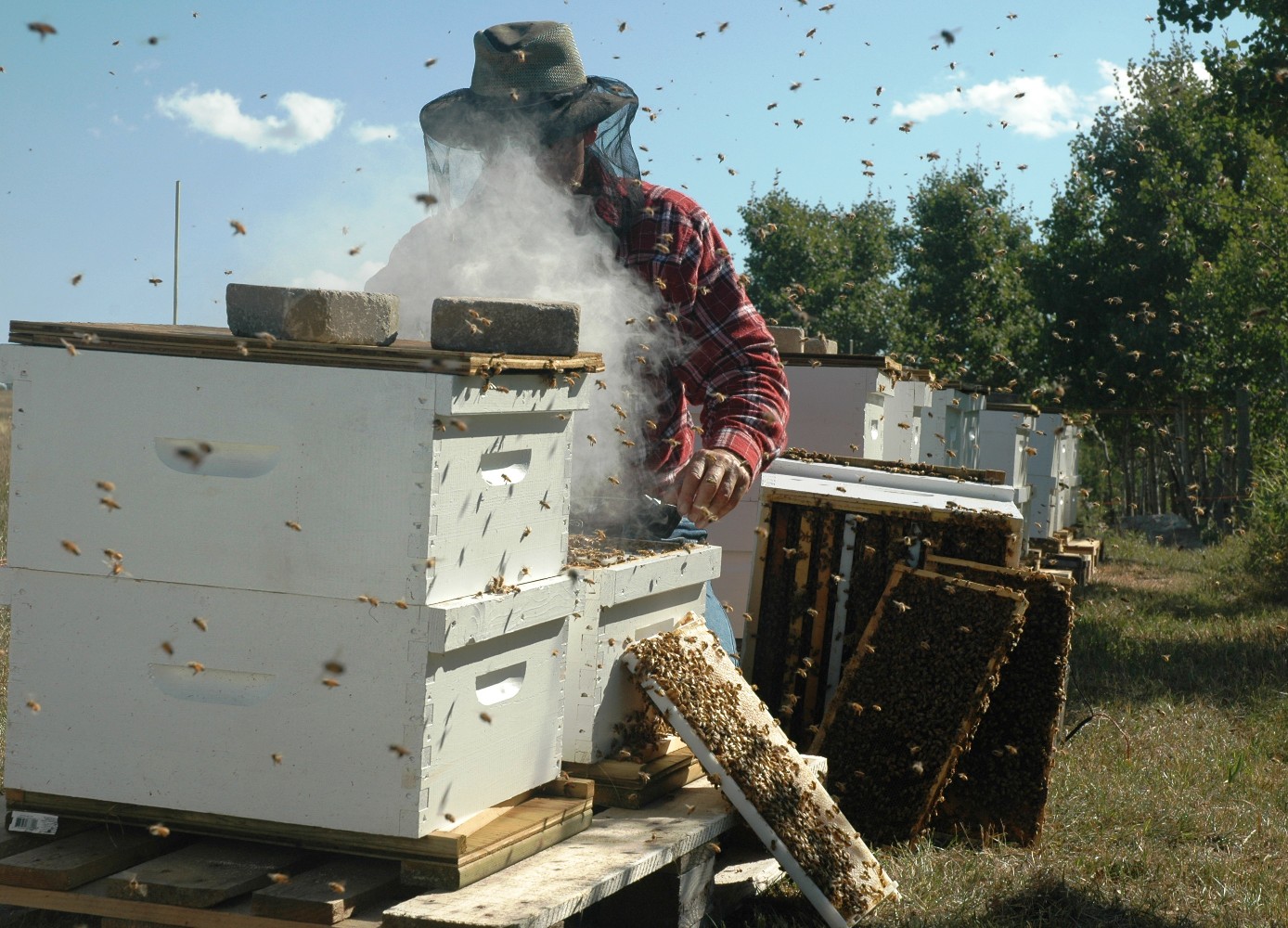
Honey bees regulate the brood nest closely, usually around 34–35°C, with a workable range either side. When the air outside is hot, the colony cools the hive by fanning, spreading water for evaporative cooling and moving bees away from the brood area. This behaviour is normal, but it uses a lot of workers.
Prolonged heat can cause problems when it combines with overcrowding, poor airflow, drought, a nectar dearth or high Varroa pressure. The colony may forage less during the hottest part of the day, collect more water, reduce brood rearing temporarily or become more vulnerable to robbing if food is scarce.
In the UK, hot weather is rarely as extreme as in hotter beekeeping regions, but many British hives are positioned for winter benefit: full sun, sheltered sites and dark roofs. That can become a disadvantage during a run of 28–32°C days, especially where hives sit against walls, fences, tarmac or other heat-reflective surfaces.
Recognising heat stress in the hive
Some warm-weather behaviour is normal. A beard of bees hanging outside the entrance on a hot evening does not automatically mean the colony is in danger. It often means the bees are reducing crowding inside the brood nest.
Look more closely if you see several signs together:
- Heavy fanning at the entrance, under the floor or around upper gaps.
- Bees clustering outside the brood box during the day, not just in the evening.
- Large numbers of bees collecting water and returning quickly.
- Reduced foraging in the middle of the day, with activity shifting to morning and evening.
- Bees spreading across the landing board and shading the entrance.
- Agitated behaviour, excessive buzzing or unusual drifting between hives.
- Dead bees on the landing board or in front of the hive.
- Signs of brood damage, patchy brood or sunken cappings after a hot spell.
- Softening or sagging comb, especially new comb, foundationless comb or heavy honey comb in very hot positions.
If a colony is bearding but otherwise calm, well supplied with water and adequately ventilated, avoid overreacting. If bees are fanning hard all day, dead bees are appearing, the hive is in direct afternoon sun and the colony is overcrowded, act promptly.
Prepare before a hot spell
Choose the right apiary position
The best summer position for a hive is often morning sun with light or dappled afternoon shade. Morning sun encourages early flying and helps dry the hive. Afternoon shade protects the roof and upper boxes during the hottest hours.
Where possible:
- Avoid placing hives tight against south- or west-facing walls.
- Keep hives away from tarmac, concrete yards and metal surfaces that reflect heat.
- Leave space between hives so air can move around them.
- Keep entrances clear of long grass, stacked kit or objects that block airflow.
- Consider whether a hive that performs well in spring becomes too exposed in July and August.
A permanent move is easier to plan outside the heatwave. If a hive repeatedly struggles in hot weather, record it and consider repositioning it for the following season.
Use shade sensibly
Shade is one of the safest and most effective cooling measures. A shade cloth, temporary sail, parasol, sheet of exterior ply on supports or a simple frame over the hives can reduce roof temperature significantly.
Aim to shade the roof and the western side of the hive during the hottest part of the day. Do not wrap the hive tightly or drape cloth directly over entrances and vents. The colony needs shade and airflow, not a blanket.
For an apiary in full sun, prepare shade equipment before the forecast peak. It is much easier to install a free-standing shade frame calmly than to improvise while bees are already stressed.
Check roof colour and insulation
Dark roofs absorb heat. If your hives are in full sun, a pale roof or a reflective outer cover can help. You do not need to repaint every box, but light-coloured roofs and upper boxes are useful in exposed apiaries.
Do not assume all insulation is bad in summer. Good roof insulation can reduce heat gain from direct sun, especially in poly hives or well-made wooden hives. The problem is usually winter kit that traps damp, blocks airflow or creates a hot stagnant space above the crownboard.
Before summer:
- Remove damp quilts or winter wraps that are no longer needed.
- Check that roofs sit securely but do not create unnecessary trapped heat.
- Make sure any ventilation ports are rainproof and not blocked.
- Keep crownboards, ekes and empty feeders from creating dead spaces unless they are needed.
Keep colonies strong and uncrowded

A crowded colony has more difficulty moving air through the hive. Add supers in good time when there is a nectar flow and the bees are ready for them. Space above the brood nest lets bees store nectar away from brood and reduces congestion.
Also keep on top of Varroa monitoring and disease control. A colony carrying a heavy mite burden has fewer healthy workers available for cooling, brood care and foraging. Plan treatments around the season and product instructions, rather than waiting until a heatwave forces urgent decisions.
What to do during hot weather
Provide safe water
Bees need water to cool the hive. In hot spells, a reliable water source is as important as shade.
Good bee water stations include:
- Shallow trays with stones, gravel, corks or floating wood.
- Poultry drinkers with landing material around the edge.
- Saucers filled with pebbles and topped up regularly.
- Purpose-made bee drinkers that prevent drowning.
Place water near the apiary before the heat arrives if possible. Bees often remain loyal to a water source once they have found it, so late changes may be ignored for a while. Keep the water topped up and clean, especially in hot weather.
Avoid open buckets or deep containers where bees drown. Do not put an open water container inside the hive. Bees will carry water in themselves and use it where needed.
If your bees are visiting neighbours’ ponds, paddling pools or animal troughs, provide a better source in your apiary and keep it consistent.
Improve airflow without exposing the colony
Ventilation should be controlled, rainproof and defensible. The aim is to help air move through the hive without creating entrances that wasps or robbing bees can exploit.
Useful steps include:
- Removing or partly withdrawing the Varroa monitoring tray under an open mesh floor during hot weather.
- Widening the entrance if the colony is strong enough to defend it.
- Using a ventilated or mesh crownboard where appropriate.
- Opening a purpose-made top entrance if your equipment has one and robbing pressure is low.
- Making sure grass and debris are not blocking the entrance.
Be cautious with top entrances later in summer, particularly during a nectar dearth. They can improve convection, but they can also create robbing opportunities if left unmanaged. Reduce entrances again if wasps, robbing or fighting at the hive front becomes a problem.
Do not prop roofs open in a way that lets rain in or gives pests access. Do not create random gaps with broken kit and hope the bees will manage them.
Add shade immediately if the hive is in full sun
If a hive is overheating in direct afternoon sun, shade it first. This is usually safer than moving the hive.
A good temporary setup:
- Shades the roof and upper boxes.
- Leaves space for air to move around all sides.
- Does not block the entrance.
- Is secure in wind.
- Does not rest directly on the roof unless it is designed to do so.
A board raised above the roof with an air gap can work well in an emergency. Shade cloth on poles is better than cloth lying flat on the hive.
You can dampen the ground nearby or dampen shade cloth above the hive to cool the immediate area, but do not soak the hive, spray the bees or create a humid covering that traps warm air.
Avoid unnecessary inspections
Opening the hive in strong sun exposes frames, brood and bees to heat and light. It also disrupts the workers that are actively cooling the colony.
During a heatwave:
- Inspect early morning or in the evening if an inspection is essential.
- Keep inspections short and purposeful.
- Avoid leaving brood frames exposed.
- Keep supers and brood boxes covered when off the hive.
- Postpone queen marking, requeening, comb changes and non-urgent manipulations.
If you only need to confirm that the hive has shade, water, space and airflow, you can often do that from outside the colony.
Manage supers and space
If a strong colony is crowded and nectar is coming in, add a super before the hive becomes packed. Congestion increases bearding and makes cooling harder.
When handling supers in hot weather:
- Keep boxes level to protect heavy comb.
- Avoid leaving honey supers uncovered in the sun.
- Be careful with new, soft or poorly attached comb.
- Do not stack dark boxes in direct sun while you work.
If a super is full, add space promptly if there is still a flow. If the flow has stopped and the colony is short of stores, assess carefully before removing too much honey.
Feed only if needed
Hot weather can coincide with a nectar dearth. A colony may look busy collecting water but still be short of food. If a hive genuinely needs feeding, feed carefully.
Use an internal feeder, feed in the evening, avoid spills and reduce the entrance if robbing risk is high. Do not leave syrup exposed around the apiary. Thin syrup can add humidity and may stimulate robbing if managed carelessly, so only use the feed type that suits the need and the season.
Do not feed simply because it is hot. Feed because the colony is short of stores.
Emergency interventions for severe heat
If a hive is overheating badly
Start with the least disruptive actions:
- Add shade over the roof and western side.
- Provide or refresh water.
- Remove or open the Varroa tray under an open mesh floor.
- Widen the entrance if the colony can defend it.
- Add space if the hive is crowded and the colony is strong.
- Avoid further disturbance and reassess later in the day.
These steps solve most UK heat problems without moving the hive.
Moving a hive to shade
Moving a hive during hot weather is a last resort. For a hive only slightly exposed, shade in place is usually safer.
If a move is unavoidable:
- Move at night or very early morning when flying has stopped.
- Secure the boxes so they cannot shift.
- Keep the hive level and well ventilated.
- Maintain the entrance direction if possible.
- Use branches or a visual marker at the entrance to encourage reorientation.
- Expect some foragers to return to the old position if the move is only a few metres.
For planned moves within an apiary, small daily shifts are often less disruptive. For longer moves, follow normal beekeeping practice for relocating colonies safely and legally.
Splitting a colony
Splitting is rarely the best emergency cooling measure. It adds stress, creates extra management demands and can leave both parts more vulnerable if conditions are poor.
Consider a split only if it is already part of your swarm or colony management plan, the colony is strong enough, and you can provide shade, water and suitable equipment for both units. In most heat situations, adding shade, space and airflow is safer.
What not to do
Avoid these common mistakes:
- Do not repeatedly open the brood box to see whether the bees are cooler.
- Do not close entrances to “keep heat out”; the colony needs airflow.
- Do not place open water inside the brood chamber.
- Do not spray bees or brood frames with water.
- Do not wrap hives in wet sacks, plastic or tarpaulin that traps humidity.
- Do not leave top gaps open where rain, wasps or robbing bees can enter.
- Do not rely on untested DIY cooling devices such as sealed ice blocks above crownboards, where condensation and leaks may cause harm.
- Do not ignore robbing risk after a hot spell, especially in late summer.
Record-keeping: what to log and why
Good heatwave records turn guesswork into better apiary planning. Use Bee Hive Tracker or your own notebook to record what happened and what worked.
For each hive, note:
- Date and time.
- Approximate temperature, cloud cover, wind and humidity if known.
- Whether the hive was in sun, partial shade or full shade.
- Hive type, box arrangement and entrance direction.
- Fanning, bearding and water-collecting behaviour.
- Stores level and whether supers were added or removed.
- Ventilation changes, such as opening an entrance or removing a Varroa tray.
- Shade added, including timing and position.
- Feeding, if any, including feed type and method.
- Dead bees, abnormal brood signs or comb damage.
- Photos of the entrance, shade setup or unusual behaviour.
- Follow-up action, such as “check in 48 hours” or “move to permanent afternoon shade in autumn”.
These records help you identify patterns. You may find that one apiary position overheats every year, that dark roofs are a problem in a particular site, or that some colonies beard heavily but remain healthy while others struggle. Bee Hive Tracker’s timestamped notes and photos make those comparisons easier at the end of the season.
Seasonal checklist for UK beekeepers
Before summer
- Check that colonies have enough space.
- Add supers before congestion becomes severe.
- Monitor Varroa and plan treatments appropriately.
- Prepare water stations.
- Have shade cloth, poles or temporary covers ready.
- Check that open mesh floors and crownboards are not blocked.
- Note hives in full afternoon sun for later repositioning.
When hot weather is forecast
- Fill water stations before the heat arrives.
- Put shade in place for exposed hives.
- Remove or open Varroa trays where suitable.
- Avoid scheduling major inspections or manipulations.
- Check that entrances are clear.
- Make sure spare supers and equipment are ready.
During the heat
- Watch entrances from outside rather than opening hives unnecessarily.
- Keep water topped up.
- Add shade and space where needed.
- Ventilate sensibly without creating robbing entrances.
- Inspect only when necessary, and do it early or late.
After the heat
- Check for queenright status if colony behaviour has changed.
- Look for brood pattern problems or comb damage.
- Review stores, especially if nectar flow stopped during the heat.
- Reduce entrances again if wasps or robbing appear.
- Record which hives coped well and which need changes next season.
Disease and safety notes
Heat can make colonies look abnormal, but do not assume heat is the only cause of dead bees, patchy brood or poor colony performance. If you see suspicious brood, sunken or perforated cappings, ropiness, unusual smells, persistent adult mortality or a sudden collapse, seek local expert advice.
In the UK, American foulbrood and European foulbrood are notifiable diseases. Contact your local bee inspector or relevant bee health authority if you suspect either disease. Your local association can also help you decide whether symptoms are heat-related, disease-related or linked to poisoning, starvation or Varroa.
Take photos, record what you saw and avoid moving equipment between colonies until you are confident there is no disease issue.
Final practical advice
Start with simple measures: provide shallow clean water, give afternoon shade and improve airflow without creating unsafe gaps. Most UK colonies will manage hot weather well if they are healthy, uncrowded and not forced to sit in strong afternoon sun.
Avoid constant inspections during the hottest part of the day. The disturbance often does more harm than good. Watch the entrance, make conservative changes and check the result later.
Record the intervention, the colony’s behaviour and the follow-up result in Bee Hive Tracker or your inspection notes. Over time, that record will show which hives need permanent shade, lighter roofs, better ventilation or a different position in the apiary.
Sources Used
- No external URLs were used; this guide is based on practical UK beekeeping experience and standard UK beekeeping advice.