How to Rebuild a Colony After Swarming
When a colony has swarmed, the job is not to panic or over-inspect. First establish what is left in the hive: bees, brood, stores, queen cells and any sign of disease. From there you have four practical routes:
- Let the colony raise and mate a new queen
- Reunite it with the captured swarm
- Introduce a mated queen or unite with a nuc
- Make up a nuc or small colony from suitable brood and bees
The right choice depends on the time of year, colony strength, weather, stores and whether you have a reliable queen available. Good notes matter: record queen status, queen cell numbers, brood stages, stores, actions taken and the next inspection date. Bee Hive Tracker is useful here because post-swarm recovery is all about timing.
What happens when a colony swarms
Swarming is the natural reproductive process of a honey bee colony. In a typical primary swarm, the old queen leaves with a large part of the adult bee population. The parent hive is left with brood, stores, nurse bees and one or more queen cells.
A primary swarm often leaves around the time the first queen cells are sealed. Because a queen takes about 16 days to develop from egg to emergence, a virgin queen may emerge from the parent colony roughly a week after the swarm has gone, depending on when the cells were started.
After emergence, the virgin queen needs suitable weather for mating flights. Once mated, she usually takes a few more days to begin laying. In practical terms, you may not see eggs for two to four weeks after the swarm, and sometimes longer if the weather is poor.
A swarm also creates a brood break in the parent colony. This can temporarily reduce Varroa reproduction, but it is not a substitute for proper Varroa monitoring and treatment planning.
UK seasonal context
In most parts of the UK, the main swarm season runs from April into June, with some colonies swarming into July or later.
Early and mid-season swarms are usually easier to recover from. There is more forage, more time for mating, and a longer period for the colony to rebuild before winter.
Late swarms are more serious. A colony that swarms in late July, August or later may struggle to produce enough winter bees and stores unless you intervene. In late season, it is often better to unite, introduce a mated queen, or use a strong nuc rather than wait for uncertain natural requeening.
Weather is also important. Warm, settled conditions favour queen mating. Prolonged rain, cold or wind after queen emergence increases the risk of mating failure.
First inspection after a swarm
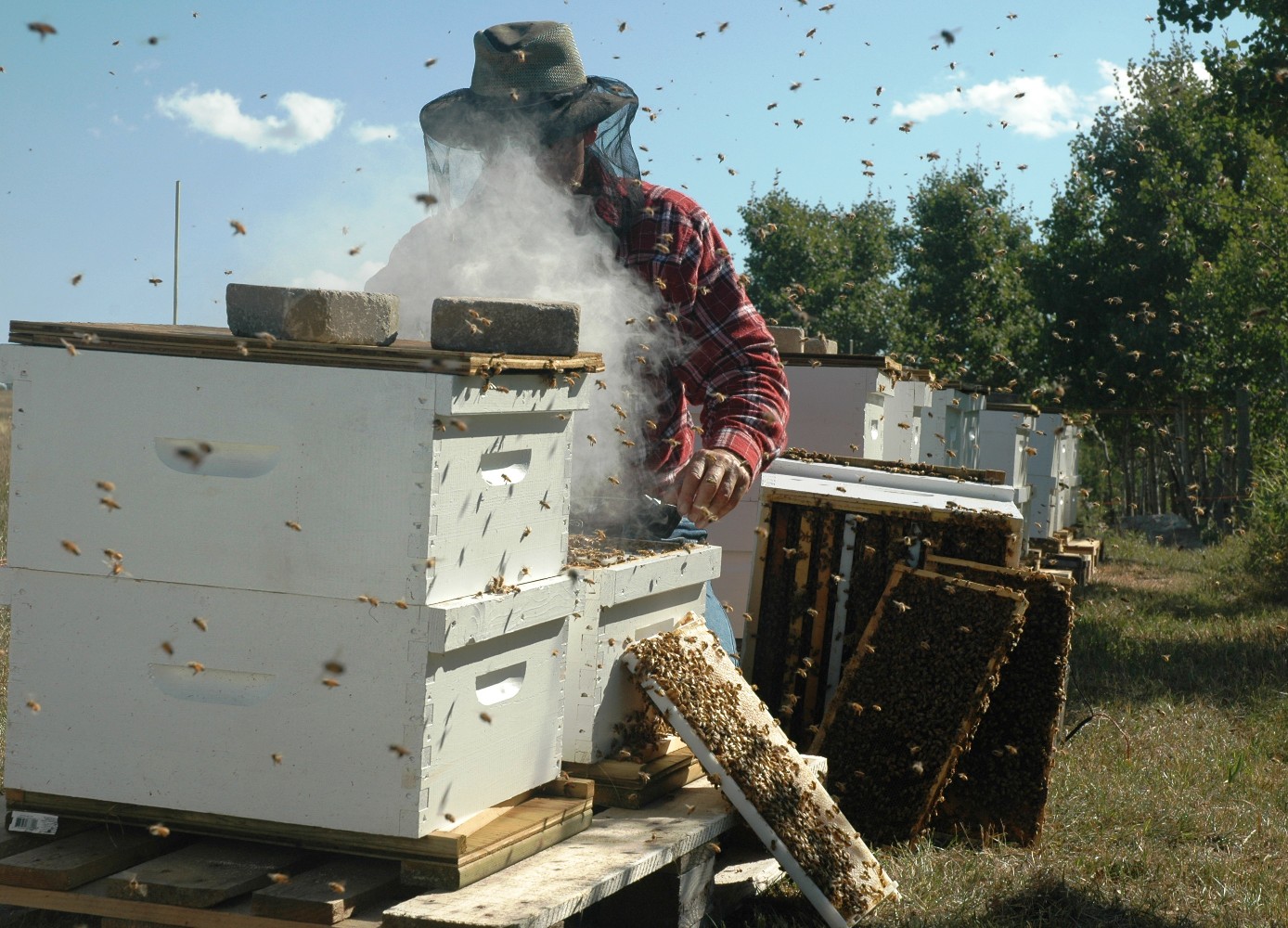
If you have seen a swarm leave, or you find a hive that appears to have swarmed, inspect with a clear purpose. Avoid repeated disturbance, especially once a virgin queen may be present.
What to record
At the first post-swarm inspection, note:
- Hive ID, apiary and date
- Whether you saw the swarm leave
- Whether the old queen was captured with the swarm
- Adult bee population, estimated by frames covered with bees
- Brood stages present: eggs, open larvae and sealed brood
- Number of queen cells
- Whether queen cells are open, sealed, torn down or emerged
- Position and quality of queen cells
- Stores: honey, nectar and pollen
- Temperament
- Signs of disease, including unusual brood pattern, sunken cappings, ropiness, foul smell, chalkbrood or deformed bees
- Action taken
- Next planned inspection date
Photographs of queen cells and brood are often helpful. Store them against the hive record in Bee Hive Tracker so you can compare progress later without relying on memory.
Key decision points
Do you have the captured swarm?
If you caught the primary swarm and it contains the old queen, you can either keep it as a new colony or reunite it with the parent hive. Reuniting can restore strength quickly, but you must deal properly with queen cells in the parent colony.
Are there eggs in the parent hive?
Eggs mean a laying queen was present within the last three days. In a recently swarmed colony, eggs can provide material for emergency queen rearing if existing queen cells are poor or damaged.
No eggs are not automatically a problem after a swarm, but if the colony has been queenless for several weeks, the risk of laying workers increases.
Are there queen cells?
Queen cells are central to your decision.
- Several large, well-formed queen cells suggest the colony is preparing to requeen naturally.
- Torn-down cells may indicate a queen has emerged.
- Small, damaged or poorly placed cells may be unreliable.
- Too many sealed queen cells can lead to cast swarms, where virgin queens leave with more bees.
If you are confident, you may reduce queen cells to one good cell, or sometimes two as insurance. Handle frames gently and never shake a frame containing queen cells. If you are unsure, ask a mentor rather than destroying cells blindly.
Is the colony strong enough?
A strong post-swarm colony with plenty of brood, bees and stores can often requeen naturally in spring or early summer.
A weak colony with few bees and poor stores is less likely to recover well. It may be better united with another colony, supported with a nuc, or given a mated queen.
What time of year is it?
As a rough guide:
- April to June: natural requeening is often reasonable if queen cells and colony strength are good.
- July: judge carefully; natural requeening may still work, but delays can cost winter strength.
- Late July onwards: consider quicker recovery through a mated queen, nuc or uniting.
Option 1: Let the colony requeen naturally
This is often the best choice for a healthy, well-stocked colony in spring or early summer.
When to choose this option
Choose natural requeening if:
- It is early or mid-season
- The colony has enough bees to cover brood
- There are good queen cells
- Stores are adequate
- You are not trying to preserve a particular queen line
- Mating weather is likely to be reasonable
How to do it
Inspect once, make your decision, and then leave the colony largely alone.
If there are many queen cells, decide whether to reduce them. Leaving many sealed cells may allow cast swarms, which further weakens the colony. Reducing to one good cell can prevent casts, but it removes your backup if that cell fails. Many beekeepers leave one strong cell and one spare if both are accessible and undamaged.
Mark the frame position of the chosen queen cell if possible. Do not shake frames containing queen cells.
Make sure the colony has enough stores. Feed only if necessary, and avoid contaminating honey supers with syrup.
Record the queen cell count, cell stage, brood stages, stores and next check date in Bee Hive Tracker or your inspection notes.
When to inspect again
Avoid frequent inspections while a virgin queen is emerging and mating.
A practical schedule is:
- Day 0: initial inspection and decision
- Around day 7: only inspect if you must manage queen cells or confirm the situation; this may coincide with queen emergence
- Days 14 to 24: avoid unnecessary disturbance while the virgin may be mating
- Days 24 to 35: check for eggs and young larvae
- By day 35: if there are still no eggs, prepare to intervene
If you see eggs and small larvae, the colony is likely queenright. You do not need to find the queen immediately, although marking her later will make future inspections easier.
Advantages and disadvantages
Advantages:
- Minimal interference
- Often produces locally adapted queens
- No cost for a bought queen
- Useful brood break may help with Varroa management planning
Disadvantages:
- Takes time
- Mating can fail in poor weather
- Cast swarms may occur if queen cells are not managed
- Late-season recovery may be too slow
Option 2: Reunite the captured swarm with the parent colony
If you captured the primary swarm and it contains the old queen, reuniting can rebuild the original colony quickly.
When to choose this option
Reuniting is useful when:
- You want one strong colony rather than two weaker ones
- The parent colony still has valuable brood
- The season is advancing
- You are confident the swarm contains the old queen
- You can safely remove queen cells from the parent hive
Important cautions
Do not simply pour the swarm back into the parent colony. If the parent hive contains queen cells or a virgin queen, you may trigger queen fighting, further swarming or queen loss.
Before uniting, decide which queen you are keeping. If keeping the old queen from the swarm, remove all queen cells from the parent colony.
Do not move brood or bees between colonies if you suspect notifiable disease.
How to reunite using newspaper
- Confirm the swarm has the queen, ideally by seeing her.
- House the swarm temporarily if needed.
- Inspect the parent colony.
- Remove all queen cells if you intend to keep the swarm queen.
- Place the queenright box over or under the parent colony using the newspaper method.
- Put a sheet of newspaper between the boxes and make a few small slits.
- Ensure ventilation is adequate.
- Feed only if stores are low.
- Check after 7 to 10 days for calm behaviour, eggs and a normal brood pattern.
Record the unite in Bee Hive Tracker, including which colony was combined, queen identity or marking, queen cells removed and next inspection date.
Advantages and disadvantages
Advantages:
- Restores workforce quickly
- Keeps the old laying queen
- Reduces the risk of a weak parent colony failing
Disadvantages:
- You lose the opportunity for a new queen
- Mistakes with queen cells can cause queen loss
- Not suitable if disease is suspected
Option 3: Introduce a mated queen or unite with a nuc
A mated queen or strong nuc is often the best answer for late-season recovery or a colony that cannot afford a long brood break.
When to choose this option
Use a mated queen or nuc if:
- It is late July, August or later
- The colony is weak
- Queen cells are poor or absent
- Mating weather has been bad
- No laying queen is present by the expected time
- You want known queen genetics
- Winter preparation is becoming urgent
Introducing a purchased mated queen
Queen introduction works best when the colony is genuinely queenless and not committed to queen cells or a virgin queen.
- Inspect carefully for queen cells and remove them.
- Check that there is no laying queen or virgin queen present.
- Introduce the caged mated queen according to the supplier’s instructions.
- Use delayed release rather than direct release unless you have a specific reason and experience.
- Leave the colony undisturbed for several days.
- Check after 7 to 10 days for acceptance.
- Check again after 2 to 3 weeks for eggs and brood.
Avoid repeatedly opening the hive during introduction. Disturbance can increase rejection.
Uniting with a nuc
A strong nuc can be united with the parent colony using the newspaper method. This gives the colony a laying queen, brood and extra bees.
Before combining:
- Decide which queen you are keeping
- Remove queen cells from the queenless or weaker colony
- Check both units for disease
- Make sure stores are adequate
If the parent colony is very weak, it may be better to move its usable frames and bees into the nuc rather than trying to save the original hive layout.
Advantages and disadvantages
Advantages:
- Faster recovery than natural requeening
- Better option for late season
- Known laying queen
- Helps build winter bees sooner
Disadvantages:
- Cost
- Queens may be rejected
- Introduction is difficult if a virgin queen or laying workers are present
Option 4: Make up a nuc from the remains
Sometimes the parent colony is not worth maintaining as a full hive, but it contains enough brood and bees to make a nuc.
When this may help
Consider making up a nuc if:
- You have spare equipment
- There are enough nurse bees and brood
- You have a mated queen available
- You want to preserve useful bees or brood
- The original colony is too weak for full-size recovery
How to make up the nuc
- Select 2 to 4 frames with brood, adhering nurse bees and food.
- Include brood in different stages if possible.
- Add a frame of stores or feed carefully if stores are short.
- Introduce a mated queen or suitable queen cell depending on your plan.
- Reduce the entrance.
- Keep the nuc warm, fed and monitored.
- Check for queen acceptance and laying at the correct interval.
Record which frames were moved, from which hive, queen status, stores and follow-up date. This is especially important if you are running several colonies and nucs during swarm season.
Dealing with laying workers
Laying workers usually appear after a colony has been queenless for several weeks. The longer it continues, the harder it is to correct.
Signs of laying workers
Look for:
- Multiple eggs in cells
- Eggs on cell walls rather than neatly at the base
- Drone brood in worker cells
- Scattered, irregular brood pattern
- No worker brood
- No queen cells from suitable young larvae
Do not confuse a newly mated queen’s first few days of laying with laying workers. A new queen may occasionally lay more than one egg per cell at first, but the pattern usually settles quickly and the eggs are placed properly.
What to do
Introducing a mated queen directly to a laying-worker colony usually fails.
Practical options include:
- Shake out a small, hopeless laying-worker colony and remove the hive so bees can beg into neighbouring colonies
- Unite with a strong queenright colony using caution and the newspaper method
- Add frames of open brood weekly for two or three weeks to suppress laying workers before requeening, if the colony is worth saving
- Use a strong nuc rather than a loose caged queen if recovery is important
If you are unsure, get help from an experienced beekeeper before risking a good queen.
If a virgin queen has emerged but is not laying
A virgin queen may take longer than expected to mate if the weather is poor. However, waiting indefinitely can leave the colony too weak to recover.
If no eggs are present by around 28 to 35 days after the swarm, reassess carefully. Possible causes include:
- Virgin queen lost on mating flight
- Poor mating weather
- Queen present but not yet laying
- Queen damaged or infertile
- Laying workers beginning to develop
If the colony is still strong and weather has only just improved, giving it another week may be reasonable. If it is late season or the colony is weakening, introduce a mated queen, unite with a nuc, or combine with another colony.
A test frame of eggs and young larvae from a healthy colony can help confirm queenlessness. If the colony starts queen cells on the test frame, it is likely queenless. Do not use test frames if there is any suspicion of disease.
Varroa and disease after swarming

A post-swarm brood break can be useful, but it should not make you complacent. Varroa can still build rapidly once brood rearing resumes.
Consider:
- Monitoring mite levels once the new queen is laying
- Planning autumn treatment early enough to protect winter bees
- Using authorised treatments only and following label instructions
- Taking advantage of a broodless period where appropriate and legal for the product used
- Recording treatment decisions and mite counts
If you suspect American foulbrood or European foulbrood, contact your local Bee Inspector or the National Bee Unit. Do not move frames, bees, supers or equipment between colonies until disease concerns are resolved.
Practical post-swarm timetable
Use this as a guide, adjusting for what you saw during inspection and local weather.
Day 0: swarm found or suspected
Inspect once with purpose.
Record:
- Adult bee strength
- Brood stages
- Queen cells
- Stores
- Disease signs
- Whether the swarm was captured
- Chosen action
If choosing natural requeening, manage queen cells if needed and then leave the colony alone.
Around day 7
This is a sensitive time because virgin queens may be emerging. Inspect only if there is a clear reason, such as managing queen cells, uniting, or resolving uncertainty.
If you inspect, be gentle. Do not shake frames.
Days 14 to 24
Avoid unnecessary inspections. Virgin queens may be mating. Excess disturbance can contribute to queen loss or balling.
Days 24 to 35
Check for eggs and young larvae. If present, the colony is rebuilding.
If no eggs are present, decide whether to wait briefly, add a test frame, introduce a mated queen, unite, or make up a nuc.
Weeks 6 to 8
Assess recovery:
- Brood pattern
- Bee population
- Stores
- Queen performance
- Temperament
- Varroa status
- Need for feeding
- Winter preparation plan
This is a good point to update the colony’s long-term record in Bee Hive Tracker, especially if the queen has changed.
Example scenarios
Spring swarm with strong parent colony and good queen cells
A colony swarms in May. The parent hive still has plenty of bees, sealed brood, stores and several large queen cells.
Best action: allow natural requeening, possibly reducing queen cells to prevent casts if you are confident. Avoid frequent inspections and check for eggs around days 24 to 35.
Mid-August swarm with weak parent colony
A colony swarms in August and the parent hive has few bees and low stores.
Best action: do not rely on slow natural recovery. Unite with a strong nuc or introduce a mated queen if the colony is suitable. Feed carefully and plan Varroa treatment so winter bees are protected.
Captured primary swarm and parent hive with sealed queen cells
You catch the swarm and find the old queen in it. The parent colony has sealed queen cells.
Best action: decide whether to keep the swarm separate or reunite. If reuniting with the old queen, remove queen cells from the parent hive and use the newspaper method. Check after 7 to 10 days.
No eggs five weeks after swarming
The colony swarmed over a month ago and still has no eggs. There is no obvious queen and the bee population is falling.
Best action: intervene. Add a test frame if the colony is strong enough and you need confirmation, or unite/requeen promptly. In late season, uniting is often safer than waiting.
Record-keeping after a swarm
Post-swarm recovery depends on dates. Without accurate records it is easy to inspect too early, wait too long, or forget whether queen cells were sealed, emerged or removed.
For every post-swarm inspection, record:
- Hive ID and apiary
- Date and inspector
- Whether the swarm was seen or captured
- Queen status
- Queen cells: number, stage and position
- Eggs, larvae and sealed brood
- Frames covered with bees
- Stores and feeding
- Disease observations
- Action taken
- Queen introduced, if applicable, including source and marking
- Colonies united or frames moved
- Next inspection date and reason
- Photos where useful
Bee Hive Tracker helps keep these dates and decisions tied to the correct hive, which is particularly useful when several colonies swarm within the same fortnight.
When to ask for help
Ask your local association, mentor or Bee Inspector for help if:
- You are unsure whether brood looks diseased
- You suspect American foulbrood or European foulbrood
- You cannot tell whether queen cells are viable
- You are unsure whether the colony has a virgin queen or laying workers
- You are introducing an expensive queen
- You have not used the newspaper method before
Practical help in the apiary is often the fastest way to avoid costly mistakes.
Final advice
A swarm is not automatically a disaster. In spring, a healthy parent colony can often recover well with careful queen cell management and patience. Later in the season, act more decisively so the colony has time to raise winter bees and build stores.
Base your decision on five things: season, queen status, colony strength, stores and disease risk. Then record what you did and when you will check again.
The best post-swarm beekeeper is not the one who opens the hive most often, but the one who makes the right intervention at the right time.
Sources Used
- https://www.gov.uk/guidance/keeping-bees
- https://www.nationalbeeunit.com
- https://www.bbka.org.uk
- https://www.gov.uk/guidance/report-notifiable-animal-diseases