How to Revive a Starving Colony
A starving colony needs fast, calm action. First confirm what is happening: a light hive, little or no food within reach of the bees, a cold cluster, robbing, queen failure or disease can all look similar at first glance. Then feed in a way the bees can actually use at the current temperature, protect the entrance, and decide whether the colony can recover on its own or needs help from brood, a new queen or combining.
If you see suspicious brood symptoms, such as sunken or perforated cappings, ropy larval remains, twisted larvae, discoloured larvae or an unusual foul smell, stop moving equipment between colonies and contact your local bee inspector before taking further action.
Emergency summary
If you think a colony is starving:
- Lift the hive gently from the back to judge weight.
- Check the entrance for robbing, fighting or unusual inactivity.
- Open the hive only as much as the weather allows.
- Look for accessible stores, bees clustered on empty comb, eggs, brood and queen signs.
- Feed immediately:
- Cold weather: fondant, candy or a sugar block directly above the cluster.
- Mild but unsettled weather: fondant is still safest; use syrup only if bees are active enough to take it.
- Warm spring or summer: syrup in an internal feeder, not an outside feeder.
- Reduce the entrance if the colony is weak or robbing is likely.
- Record what you saw and what you did, including feed type, amount, temperature and photos.
- Recheck within a few days.
Bee Hive Tracker is useful here because a starvation incident is rarely a one-off event. Logged feed amounts, inspection photos, queen status and weather help you see whether the colony is recovering or sliding further downhill.
Confirm starvation before you disturb the colony
Starvation is urgent, but it is not the only reason a hive may look weak. Spend the first few minutes narrowing the cause.
Ask these questions at the hive:
- Does the hive feel very light compared with neighbouring colonies?
- Are there sealed stores, nectar or frames of honey close to the cluster?
- Are bees clustered tightly on empty comb?
- Are dead bees head-first in cells, which is a common sign of starvation?
- Are bees moving normally, or are they chilled, scattered or dazed?
- Is there brood? If so, is it healthy-looking and well covered by bees?
- Are there eggs or very young larvae, showing a queen has laid recently?
- Are bees bringing in pollen on a suitable flying day?
- Is the colony being robbed by stronger colonies or wasps?
- Are there any brood disease warning signs?
Take photos if conditions allow, especially of brood, stores and any doubtful symptoms. Add the hive ID, date, weather and your first impression to your records while it is fresh.
Immediate hive checks
Keep the inspection short, especially in winter or early spring. A weak colony cannot afford to lose heat.
1. Heft the hive
Lift the back of the hive slightly. You are not trying to get an exact weight; you are checking whether it feels alarmingly light. If you have several hives of the same type, compare them.
A very light hive with little visible food should be treated as urgent.
2. Watch the entrance
Before opening the hive, look for:
- Fighting at the entrance
- Bees darting rapidly in and out
- Wax crumbs or torn cappings on the floor or landing board
- Dead bees around the entrance
- Wasps entering freely
- Very little activity on a day when other colonies are flying
Robbing can empty a weak hive quickly. If you open a robbed colony for too long, the smell of honey and syrup may make the attack worse.
3. Check above the cluster
Remove the roof and crownboard only if conditions allow. In cold weather, make this a brief look rather than a full inspection.
Look for:
- Fondant or previous feed still present
- Bees directly under the feed hole
- Sealed stores above or beside the cluster
- Bees clustered tightly away from food
- Moisture problems or mould
If sealed food is directly above the cluster, avoid rearranging frames in poor weather. If the cluster cannot reach stores because of cold, add fondant or candy where the bees can access it without breaking cluster.
4. Inspect the brood area only if safe
In warm enough conditions, inspect the central frames and the two frames either side of the cluster. Look for:
- Eggs
- Open larvae
- Capped brood
- Queen cells
- A compact or patchy brood pattern
- Stores close to the brood nest
- Signs of disease
Do not chill brood by leaving frames exposed. If the colony is very small, close up and feed once you have enough information to act.
How to feed a starving colony
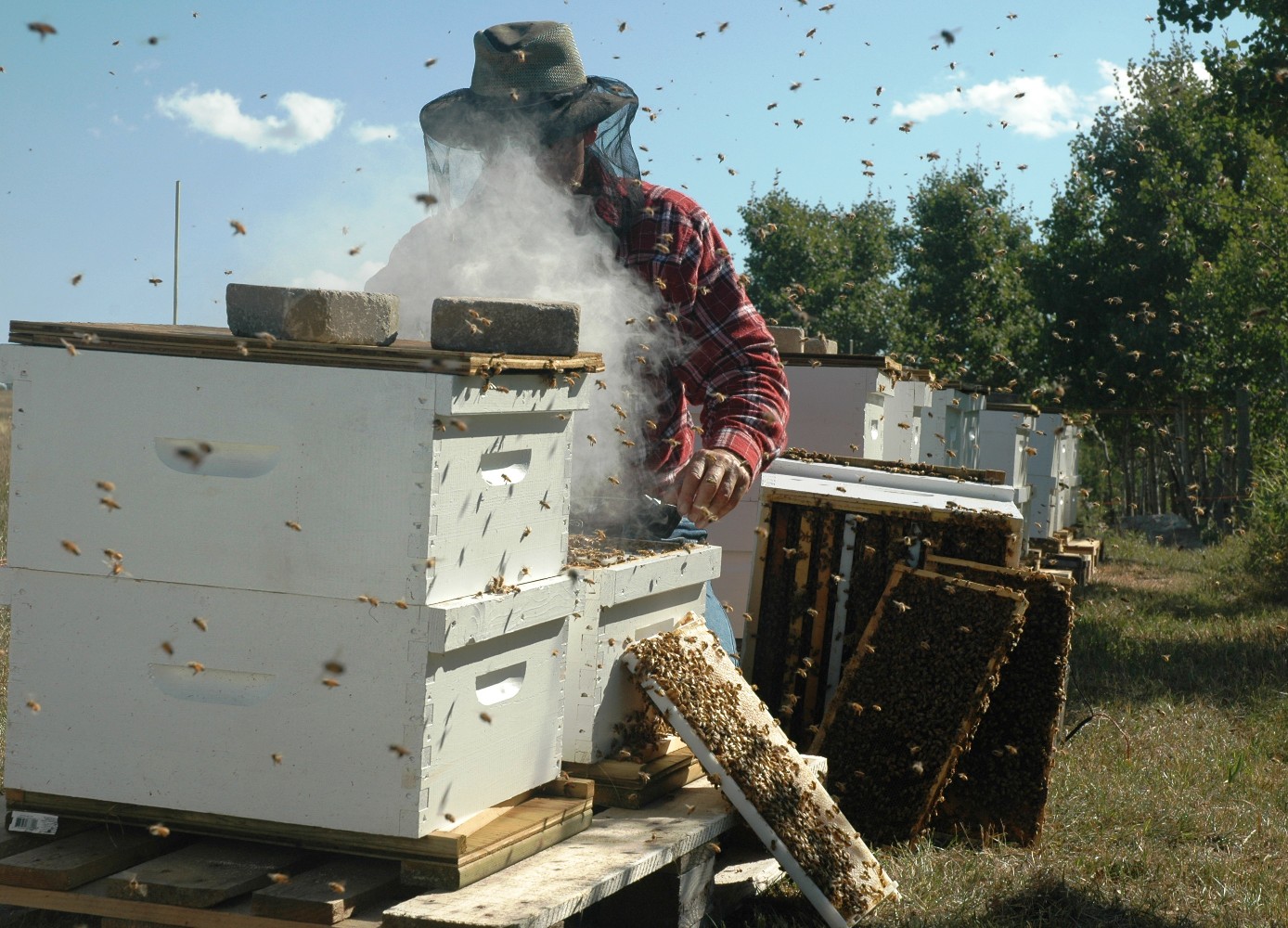
The best emergency feed depends mainly on temperature and bee activity. The feed must be reachable, safe and not likely to trigger robbing.
In cold weather: use fondant, candy or a sugar block
When bees are clustered tightly, they may not be able to reach liquid feed. Syrup can chill them, ferment, or sit unused.
Use:
- Commercial bee fondant
- Baker’s fondant suitable for bees
- Sugar candy or a sugar block
- A homemade sugar brick if you use a reliable beekeeping recipe
Place the feed directly above the cluster, usually over the feed hole or on the top bars with an eke or spacer if needed. The key point is contact: the bees must be able to reach it without travelling across cold comb.
Avoid long openings. Have the fondant ready before you lift the crownboard.
In cool early spring: fondant is usually safest
On changeable spring days, bees may fly briefly but still be unable to process large amounts of syrup safely. Fondant remains a good emergency option.
If daytime temperatures are mild and bees are actively moving, a small amount of warm syrup in an internal feeder may help, but do not rely on syrup if nights are cold and the cluster is small.
In warm spring or summer: use syrup internally
When bees are active and temperatures are suitable, syrup is useful.
Common choices:
- 1:1 syrup for spring stimulation and short-term feeding
- Heavier syrup when the aim is to build stores rather than stimulate brood rearing
Use an internal feeder, frame feeder, rapid feeder or contact feeder inside the hive. Avoid entrance feeders, especially in a weak colony, because they can encourage robbing.
Feed enough to stabilise the colony, then reassess. A very weak colony may not have the workforce to take large quantities at once, so smaller, repeated feeds may be safer.
Emergency dry sugar
Dry granulated sugar can be used as a short-term emergency measure if nothing else is available. Place it above the cluster on newspaper or in a suitable rim so bees can access it. It is not ideal, but it can keep bees alive until you can provide proper fondant or syrup.
Do not feed honey from unknown sources
Do not feed shop-bought honey or honey of uncertain origin to bees. It can carry disease spores. If you feed honey back, it should only be from your own known, healthy colonies and used with care.
What not to do
Avoid these common mistakes:
- Do not carry out a long frame-by-frame inspection in freezing or near-freezing weather.
- Do not place dilute syrup outside the hive.
- Do not spill syrup around the apiary.
- Do not move brood or stores from a colony with any disease concern.
- Do not combine colonies until you are confident both are healthy.
- Do not assume feeding alone will fix queenlessness, heavy varroa damage or brood disease.
- Do not add treatments at random while the colony is already stressed; follow product instructions and seasonal guidance.
Robbing: how to recognise and stop it
Robbing often looks like a sudden collapse. A colony may be short of food because it has been robbed, or it may be robbed because it is already weak.
Signs of robbing
Look for:
- Fighting at the entrance
- Bees forcing their way in
- Frantic, zig-zag flight in front of the hive
- Wax debris under frames or on the floor
- Torn or ragged cappings
- Robber bees leaving the hive with distended abdomens
- Wasps entering with little resistance
- A sudden drop in stores
Immediate response
If robbing is active:
- Reduce the entrance to one or two bee spaces.
- Fit a robbing screen if you have one.
- Remove outside feeders immediately.
- Feed only inside the hive, preferably with fondant or a well-contained internal feeder.
- Close gaps in boxes, floors, crownboards and roofs.
- Avoid further inspection until the attack calms.
- If necessary, cover the entrance area briefly with a damp sheet to disrupt robbing while you reduce the entrance.
If the colony is valuable and the robbing is severe, moving it to another apiary can help, but plan this properly. Moving a hive a short distance often causes flying bees to return to the original site. In most cases, use an out-apiary far enough away, and ensure the colony has ventilation, food and secure transport.
Prevention matters. Keep inspections tidy, do not leave honey frames exposed, avoid syrup spills, and reduce entrances on weak colonies before wasps and robbers become a problem.
Queen failure and starvation-like symptoms
A queenless or failing colony may dwindle until it cannot forage, defend itself or keep brood warm. It may then appear to be starving even if the original problem was queen failure.
If eggs are present
Eggs show that a queen has laid within the last three days, though they do not prove she is still present at that moment.
If the colony has eggs, larvae and enough bees to cover brood:
- Feed if stores are low.
- Protect the entrance.
- Recheck in 7 days if the brood pattern or queen status is uncertain.
- Look for signs of supersedure, emergency queen cells or improving brood.
If capped brood is present but no eggs
This may mean the queen has recently been lost, stopped laying, or is failing.
Options include:
- Adding a frame with eggs and young larvae from a healthy donor colony
- Introducing a mated queen
- Combining with a healthy colony if the population is too small
A test frame of eggs can help confirm queenlessness. If the colony raises emergency queen cells on it, they are likely queenless.
If there is no brood and no eggs
The colony cannot raise a queen without eggs or young larvae. If it still has enough workers, introduce a mated queen using a cage and follow the queen supplier’s instructions. If it is too weak, combining may be more realistic.
If laying workers are present, requeening is more difficult and combining can also be risky. Seek advice from an experienced local beekeeper if you are unsure.
Moving frames from a stronger colony
Moving brood or food can save a weak colony, but it also carries risks. Only do it if the donor colony is healthy and you have no suspicion of notifiable disease.
When it helps
A weak colony may benefit from:
- A frame of emerging brood to boost young workers
- A frame with eggs and young larvae if queenlessness is suspected
- A frame of stores if it lacks food and conditions are warm enough to rearrange frames safely
Emerging brood is often safer than large amounts of open brood because it needs less nursing and quickly adds workforce.
How to do it
- Choose frames from a strong, healthy colony.
- Keep brood warm and transfer quickly.
- Avoid taking too much from the donor colony.
- Place donated brood next to the recipient cluster, not away from the bees.
- Do not overload a small cluster with more brood than it can cover.
- Record exactly which frame came from which hive.
Moving frames is not just a practical act; it is a biosecurity decision. Good records matter if disease is later suspected.
Combining a weak colony with a stronger one
Sometimes the best way to “revive” a starving colony is not to keep it separate. If there are too few bees, no queen, no brood, or repeated decline despite feeding, combining may save the remaining bees.
Only combine colonies that appear healthy. Never combine if you have suspicious brood symptoms.
Newspaper method
The newspaper method is widely used:
- Choose the queen you want to keep.
- Remove the unwanted queen if present.
- Put the stronger colony below.
- Place a single sheet of newspaper over the top bars or between boxes.
- Make a few small slits in the paper.
- Put the weaker colony above.
- Close the hive and leave them to chew through gradually.
- Check after several days that the colonies have united and the queen is laying.
Do this in suitable weather and keep disturbance low. Reduce the entrance if the united colony is still vulnerable to robbing.
When to suspect disease and call a bee inspector
Starvation and disease can occur together. A diseased colony may become weak, fail to gather food and then starve. Do not mask a serious brood problem by feeding, moving frames or combining.
Contact your local bee inspector promptly if you see signs that could indicate American foulbrood, European foulbrood or another serious brood condition.
Warning signs include:
- Sunken, dark or perforated cappings
- Ropy brown larval remains when tested by an inspector or experienced beekeeper
- Scales dried onto the lower cell wall
- Twisted, melted or discoloured larvae
- Patchy brood with larvae dying before capping
- An unusual sour or foul smell from brood
- Repeated unexplained brood failure
Do not transfer frames, bees, comb, honey or equipment from the suspect colony. Take clear photos, close the hive, mark your notes, and seek official advice.
In England and Wales, the National Bee Unit and local bee inspectors provide guidance through BeeBase. Scotland and Northern Ireland have their own bee health arrangements, so use the appropriate local route.
First 24 hours: practical checklist
Use this checklist when you are at the apiary and need to act quickly.
- Record hive ID, date, time and weather.
- Heft the hive to assess weight.
- Watch the entrance for robbing or wasps.
- Open only as much as conditions allow.
- Check for accessible stores.
- Check for eggs, brood and queen signs if warm enough.
- Look carefully for brood disease symptoms.
- Feed according to temperature:
- Cold: fondant, candy or sugar block above the cluster.
- Cool: usually fondant; syrup only if bees are active enough.
- Warm: syrup in an internal feeder.
- Reduce the entrance on weak colonies.
- Remove or avoid outside feeders.
- Take photos of brood and stores.
- Set a follow-up reminder for 2 to 7 days, sooner if the colony is critical.
Log the feed type, amount and method in Bee Hive Tracker so you can see whether the colony consumes it and whether further feeding is needed.
The next 7 to 14 days
A starving colony is not fixed just because feed has been added. It needs follow-up.
At the next inspection, check:
- Has the feed been taken?
- Are bees more active?
- Are there still enough bees to cover brood?
- Are eggs present?
- Are queen cells present?
- Has robbing stopped?
- Are stores building?
- Is the brood pattern improving or worsening?
Continue feeding until the colony has reliable stores or a natural nectar flow is supporting it. Avoid starting and stopping feed repeatedly if the colony has no other food source.
If there is no improvement after one to two weeks, reassess the true cause. The colony may be queenless, badly affected by varroa and viruses, too small to recover, or suffering from disease.
Longer-term recovery
Once the colony is no longer in immediate danger, deal with the reasons it became weak.
Stores and seasonal targets
In autumn, a full-sized colony on a National hive often needs around 18 to 22 kg of stores for winter, though requirements vary by region, hive type, colony size and weather. Larger hives and colder, longer winters may need more. Nucs need less but are also more vulnerable to isolation from stores.
Do not rely on guesswork alone. Heft regularly, compare similar hives, and record feed given and stores seen.
Varroa and viruses
A weak colony is more vulnerable to varroa-related viruses. After stabilising the food situation:
- Review the colony’s varroa treatment history.
- Monitor mite levels if appropriate.
- Treat within the correct seasonal window and according to the product label.
- Avoid stressing a failing colony with poorly timed or unsuitable treatments.
If varroa has already caused severe collapse, feeding may not be enough.
Wasps, wax moth and other pressures
Weak colonies are easier targets. Keep entrances reduced, remove unused comb space where appropriate, and avoid leaving a small colony in a large volume it cannot defend.
Watch for:
- Wasps entering the hive
- Wax moth damage in unguarded comb
- Damp, mouldy combs
- Excess empty space
- Poor ventilation or water ingress
Example scenarios
Winter: light hive, tight cluster, cold weather
You heft the hive and it feels very light. Bees are clustered tightly, there is little movement, and the weather is too cold for a full inspection.
Action:
- Do not pull brood frames.
- Place fondant or candy directly above the cluster.
- Reduce the entrance if needed.
- Close up quickly.
- Record the action and check feed use in a few days.
Early spring: bees alive, little food, no eggs
The colony has some capped brood but no eggs. Stores are low and the population is modest.
Action:
- Feed immediately.
- If disease is not suspected, consider adding a test frame with eggs from a healthy colony.
- Recheck in 7 days for emergency queen cells.
- If you need faster recovery, consider introducing a mated queen.
Warm weather: robbing in progress
Bees are fighting at the entrance, wax crumbs are visible, and the colony is being overwhelmed.
Action:
- Reduce the entrance immediately.
- Fit a robbing screen if available.
- Remove all outside feed.
- Feed internally only after the hive is secure.
- Avoid opening the colony again until robbing settles.
- Reassess stores and queen status once calm.
Small colony with no brood
The hive is light, there are very few bees, no brood and no eggs.
Action:
- Feed if the bees are still viable.
- Decide quickly whether there are enough bees to justify a mated queen.
- If too weak, combine with a healthy colony.
- Do not combine if there is any disease concern.
Record-keeping: what to note
Good records turn an emergency into a learning point. For each starvation incident, record:
- Hive ID
- Date and time
- Weather and approximate temperature
- Hive weight impression
- Stores seen
- Feed given and quantity
- Feeder type
- Brood stages present
- Queen seen or queen signs
- Queen cells
- Robbing or wasp pressure
- Frames moved and donor hive ID
- Treatments recently used
- Photos taken
- Next planned inspection
Bee Hive Tracker can keep these details attached to the hive record, along with photos and reminders. This is particularly useful when you are comparing colonies, checking whether feed is being consumed, or explaining a concern to a mentor or bee inspector.
When to buy a queen or give up on saving the colony
Requeening may be sensible if:
- The brood pattern remains poor after feeding and recovery time
- The queen is old or failing
- The colony is queenless but still has enough workers
- You need the colony to build up quickly
Combining may be better if:
- There are too few bees to cover brood
- There is no brood and no realistic route to recovery
- The colony has repeatedly failed despite support
- The season is too late for successful queen mating
- Resources would be better used strengthening another colony
Beekeeping often requires pragmatic decisions. Saving the bees may mean uniting them rather than maintaining a separate weak hive.
Getting help
If you are unsure, ask early. A local association mentor can often tell in minutes whether a colony is starving, queenless, being robbed or showing disease symptoms.
Contact a bee inspector immediately if foulbrood is suspected. Do not wait until you have moved frames through the apiary.
Also take care of yourself. Emergency feeding often happens in poor weather, with heavy boxes and awkward lifting. Work methodically, avoid rushing, and get help with heavy equipment.
Final advice
Be decisive, but do not be reckless. Feed a starving colony promptly with the right feed for the conditions. Reduce entrances and stop robbing. Check queen status when weather allows. Do not move frames or combine colonies if disease is suspected.
Most importantly, follow up. A starving colony needs more than a single emergency feed. Keep clear records, add photos, set reminders, and review why the hive became short of food in the first place. That is how you save more colonies next season.
Sources Used
- https://www.gov.uk/guidance/bee-health-and-diseases
- https://www.nationalbeeunit.com
- https://www.bbka.org.uk