How to Stop Bees Absconding
When a honey bee colony absconds, the queen and most of the workers leave the hive and do not return. In the UK it is less common than swarming, but it does happen, particularly with stressed nucs, overheated hives, heavy varroa pressure, queen problems, disturbance, starvation risk or disease.
The best response is not simply to replace the bees. Treat absconding as a warning sign. Look for the cluster, inspect the abandoned hive carefully, rule out notifiable disease, secure any comb and stores safely, then correct the conditions that pushed the colony out.
Good records matter here. If you log stores, queen status, varroa counts, treatments, apiary conditions and weather in Bee Hive Tracker or your apiary notebook, you are far more likely to spot the pattern before another colony disappears.
Absconding or Swarming?
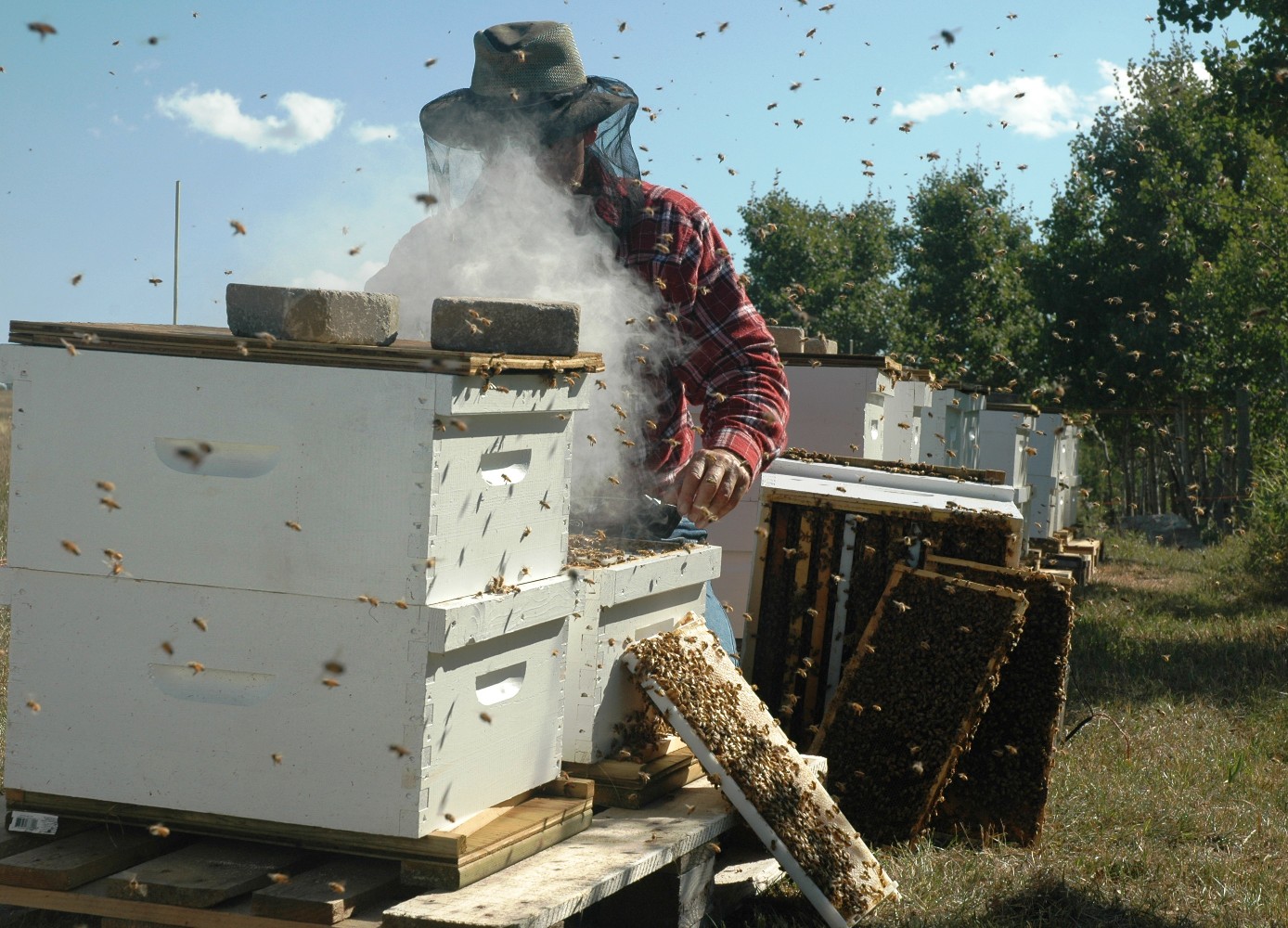
Absconding and swarming can look similar from a distance, but they are not the same behaviour.
Absconding

Absconding is usually a stress response. The queen and most of the adult bees leave the hive, often abandoning brood, comb and stores. They may cluster nearby for a short time, but they may also move off before you find them.
Common features include:
- The hive is almost empty of adult bees.
- The queen is gone.
- Brood may be left behind.
- Stores may still be present.
- There may be signs of disease, wax moth, robbing, overheating, starvation pressure, pesticide exposure or heavy varroa.
- A small or unsettled cluster may be found nearby.
Swarming
Swarming is normal colony reproduction. The old queen leaves with a proportion of the flying bees, but the parent colony usually remains viable.
Common features include:
- Plenty of bees remain in the hive.
- Queen cells are usually present.
- Brood and stores remain under care.
- The swarm often forms a compact cluster nearby.
- The parent colony should continue with a virgin queen or emerging queen cells.
If the hive still contains a good population and queen cells, you are probably dealing with swarming. If almost all the bees have gone, think absconding, collapse, robbing-out, poisoning or severe stress.
First Checks When a Hive Appears Empty
Do not rush into cleaning out the hive. Your first job is to work out what has happened and avoid spreading disease.
1. Look for the bees
Search within sight of the hive:
- Fence posts
- Hedges
- Tree branches
- Shed roofs
- Undersides of stands
- Long grass near the apiary
- Nearby walls or sheltered corners
An absconded colony may cluster briefly before moving on. If you find a cluster, avoid shaking it immediately unless you are ready with suitable equipment. Take a photo and note the location.
2. Inspect the entrance and floor
Look for:
- Dead bees at the entrance
- Fighting, torn wings or wax debris from robbing
- Mouse damage
- Chewed comb fragments
- Chalkbrood mummies
- Wax moth debris
- Signs that the entrance was blocked or restricted
- Unusual numbers of trembling, crawling or disorientated bees
Lots of dead bees may point towards poisoning, starvation, disease or robbing rather than straightforward absconding.
3. Open the hive carefully
Check the frames before moving anything off site.
Look for:
- Brood left unattended
- Amount of honey and pollen
- Queen cells
- Patchy brood
- Dead brood
- Sunken or perforated cappings
- Ropiness in larvae
- Sour or unpleasant smell
- Wax moth galleries
- Varroa levels on the floor or brood
- Signs of overheating, such as melted or slumped comb
If you suspect American foulbrood or European foulbrood, stop. Close the hive, do not remove frames, do not transfer comb to other colonies and contact your local Bee Inspector or the relevant bee health authority.
4. Record the event immediately
Record:
- Hive ID
- Apiary location
- Date and time
- Weather
- Last inspection date
- Queen status at last inspection
- Brood pattern
- Number of frames of bees previously seen
- Stores estimate
- Recent feeding
- Varroa monitoring results
- Varroa treatments and dates
- Nearby spraying, forage changes or disturbance
- Photos of frames, floor, entrance and any cluster
Bee Hive Tracker is useful for this because absconding often makes more sense when compared with earlier inspection notes.
Common Causes of Bees Absconding
Absconding is rarely caused by one small issue. More often, several pressures build up until the colony abandons the nest.
1. Lack of Food or Forage
Colonies can become stressed when nectar dries up, especially in a summer dearth or during prolonged poor weather. Newly made nucs, small colonies and recently moved hives are most vulnerable because they have fewer foragers and smaller reserves.
Signs to look for
- Light hive when hefted
- Little or no open nectar
- Low pollen
- Small brood nest
- Agitated or defensive bees
- Robbing pressure from stronger colonies
- Bees abandoning brood despite some comb remaining
How to prevent it
- Check stores before known local dearth periods, often July and August in many UK areas.
- Feed nucs and newly established colonies if forage is poor.
- Use internal feeders, contact feeders or frame feeders rather than open feeding.
- Reduce entrances on small colonies to help them defend against robbing.
- Avoid moving weak nucs into poor forage without giving them immediate support.
- Record frames of stores at each inspection so shortages are spotted early.
Feeding is not a cure for disease or queen failure, but it can prevent a borderline colony from tipping into crisis.
2. Queen Problems or Queenlessness
A colony with a failing queen may become unsettled and poorly organised. If the brood pattern is poor, the queen is absent, or the colony cannot replace her successfully, the bees may dwindle, become vulnerable to robbing or occasionally abscond.
Signs to look for
- Patchy brood
- Drone brood in worker cells
- No eggs or young larvae
- Multiple eggs in cells
- Poor colony cohesion
- Lack of young bees
- Repeated supersedure attempts
How to prevent it
- Check queenright status regularly, especially in nucs.
- Mark queens where possible to make checks quicker.
- Replace failing queens promptly.
- Use locally adapted queens or queenright nucs where practical.
- Do not leave weak, queenless colonies to struggle through a dearth or into autumn.
A colony with a good queen, healthy brood and enough young bees is far less likely to abandon the hive.
3. Varroa, Pests and Disease
Heavy varroa pressure weakens adult bees and brood. Colonies may dwindle rapidly, become disorganised and appear to have “vanished”. This is often described as absconding, although in many cases it is more accurately a collapse followed by robbing or drifting.
Wax moth can also overwhelm weak colonies in warm weather. Notifiable brood disease must always be considered when brood is abandoned.
Signs to look for
- High mite drop
- Deformed wings
- Crawling bees
- Patchy brood
- Dead or dying brood
- Wax moth webbing and tunnels
- Sunken, perforated or greasy-looking cappings
- Ropy larval remains
- Unpleasant brood smell
How to prevent it
- Monitor varroa rather than guessing.
- Record mite counts and treatment dates.
- Treat at the correct time using authorised products and label instructions.
- Check treatment effectiveness afterwards.
- Do not allow weak colonies to remain on large amounts of comb in warm weather.
- Store spare comb properly to prevent wax moth damage.
- Contact a Bee Inspector if brood disease is suspected.
American foulbrood and European foulbrood are notifiable in the UK. Do not move suspect frames, shake bees, unite colonies or reuse comb unless advised by an inspector.
4. Heat, Poor Ventilation and Bad Hive Siting
A hive that bakes in full sun, sits in a damp hollow or faces persistent wind can become stressful to occupy. Bees can ventilate very effectively, but small colonies and nucs have limited workforce.
Signs to look for
- Heavy bearding in hot weather
- Bees fanning constantly
- Slumped or softened comb
- Brood nest exposed to excessive heat
- Condensation problems in cold or damp sites
- Colonies repeatedly struggling in one position while others do well
How to prevent it
- Choose a site with morning sun and some afternoon shade in hot periods.
- Keep hives off damp ground.
- Avoid frost pockets and exposed windy ridges.
- Face entrances away from prevailing wind where possible.
- Ensure the roof and crownboard arrangement allows sensible ventilation without chilling the brood.
- Give nucs enough space before they become overcrowded.
- Use stands that keep hives stable and level.
Do not over-ventilate in cool weather. The aim is a dry, stable hive environment, not a draughty one.
5. Repeated Disturbance
Too much interference can unsettle a colony, especially soon after installation. New nucs, packages, casts and small colonies need time to orientate, build comb and establish brood.
Common sources of disturbance
- Over-frequent inspections
- Rough handling
- Livestock rubbing against hives
- Badgers, mice or woodpeckers
- Children or public interference
- Vibration from machinery
- Moving colonies repeatedly
- Robbing by other bees or wasps
How to prevent it
- Keep inspections purposeful and efficient.
- Avoid opening colonies unnecessarily during poor weather or nectar dearth.
- Secure hives against livestock and badgers where needed.
- Fit mouse guards in autumn.
- Reduce entrances on small colonies.
- Site hives away from footpaths, gates and regular disturbance.
- Give newly installed colonies a few settled days before the first full inspection.
A calm apiary is not just easier to work. It also reduces stress on small or unsettled colonies.
6. Robbing and Wasp Pressure
Robbing can trigger abandonment or make an absconded hive appear far worse by stripping stores quickly. Weak colonies are particularly at risk in late summer.
Signs to look for
- Fighting at the entrance
- Bees zig-zagging around hive fronts
- Wax cappings scattered on the floor
- Ragged comb edges
- Sudden loss of stores
- Wasps entering freely
- Strong colonies becoming highly defensive nearby
How to prevent it
- Reduce entrances on nucs and weak colonies.
- Avoid spilling syrup.
- Do not leave wet supers or exposed comb near the apiary.
- Feed internally.
- Work quickly during dearths.
- Avoid opening several weak colonies for long periods.
- Unite colonies that are too weak to defend themselves.
Once robbing starts, it can spread quickly through an apiary. Early entrance reduction and tidy feeding make a big difference.
7. Pesticide or Chemical Exposure
Pesticide exposure can kill or disorient foragers and leave the colony weakened. It may not always cause true absconding, but it can contribute to sudden colony loss or abandonment.
Signs to look for
- Many dead or dying bees outside the hive
- Trembling, spinning or disorientated bees
- Bees crawling and unable to fly
- Sudden loss of foragers
- Similar symptoms in several hives at the same site
- Recent spraying nearby
How to reduce risk
- Speak with neighbouring farmers, land managers and gardeners.
- Ask to be notified before spraying near flowering crops or weeds.
- Avoid placing hives beside high-risk spray areas where alternatives exist.
- Keep clear records of suspected incidents, including dates, weather and photos.
- Contact the National Bee Unit, APHA or the relevant reporting route for advice if poisoning is suspected.
Do not send samples unless instructed. Take photos, preserve evidence and record the timeline.
8. Newly Established Colonies
Nucs, packages, shook swarms and recently collected swarms are more prone to absconding than settled full colonies. They have not yet invested heavily in the hive.
How to help them stay
- Install them into a clean, suitable hive or nuc.
- Give enough space, but not excessive empty space.
- Provide drawn comb if available and safe.
- Feed if forage is poor.
- Avoid repeated disturbance in the first week.
- Keep them shaded from extreme afternoon heat.
- Reduce the entrance until they are established.
- Check queen laying once they have settled.
Some beekeepers temporarily use a queen excluder arrangement to discourage a queen from leaving a newly hived swarm, but this must be used with care and never as a substitute for fixing poor conditions. Do not trap virgin queens or drones indefinitely, and remove any restriction promptly once the colony is settled.
What to Do If You Find the Absconded Cluster
If the bees are clustered nearby, you may be able to recover them.
Prepare suitable equipment
Use:
- A clean nuc box or hive
- Frames with foundation or clean drawn comb
- A frame of stores if disease-free and from a trusted source
- A feeder if forage is poor
- Protective clothing
- A sheet or ramp if useful
- Secateurs if the cluster is on a small branch
If you have any suspicion that the original hive contains notifiable disease, do not use frames or stores from it.
Collect the cluster
- Work calmly, ideally late afternoon or early evening.
- Place the nuc or hive directly under or beside the cluster.
- Shake or brush the bees into the box if safe.
- Leave the box open for stragglers to enter.
- Once most bees are inside, close and move it to the chosen stand.
- Feed lightly if needed and reduce the entrance.
- Recheck within a few days for queen presence and settling.
If the cluster is high, dangerous or on someone else’s property, get help from your local association or an experienced beekeeper. Do not take risks with ladders.
What to Do If the Hive Is Empty
If there is no cluster and the hive is abandoned, slow down and investigate.
If disease is suspected
- Close the hive.
- Do not shake bees or brush frames.
- Do not move comb, stores or equipment to another colony.
- Contact your local Bee Inspector or bee health authority.
- Follow official instructions.
If no disease is suspected
- Photograph frames, floor and brood.
- Note the amount of brood and stores left.
- Check for wax moth, robbing, starvation signs and varroa.
- Secure exposed comb to prevent robbing.
- Freeze comb if you need to control wax moth and disease has been ruled out.
- Clean and repair the hive before reuse.
- Review your records to identify likely causes.
Do not automatically reuse abandoned comb. It may contain pathogens, pesticide residues or pest damage. If in doubt, discard it safely or seek advice.
How to Prevent Absconding: A Practical Apiary Checklist
Use this checklist during routine inspections, especially for nucs, small colonies and hives in difficult sites.
Queen and brood
- Is the colony queenright?
- Are eggs or young larvae present?
- Is the brood pattern healthy?
- Are there signs of laying workers or drone-laying queen?
- Are queen cells expected or a sign of stress?
Food and forage
- How many frames of stores are present?
- Is there pollen coming in?
- Is nectar available locally?
- Is a dearth starting?
- Does a nuc need feeding?
Varroa and disease
- When was varroa last monitored?
- What was the mite count?
- When was the last treatment?
- Did the treatment work?
- Are there deformed wings or patchy brood?
- Are there any foulbrood warning signs?
Site and environment
- Is the hive overheating?
- Is it exposed to wind or damp?
- Is there enough ventilation?
- Is the stand stable?
- Are livestock, badgers, mice or people disturbing the hive?
Colony strength
- Does the colony cover enough frames to defend its space?
- Is the entrance too wide?
- Is robbing starting?
- Should the colony be fed, requeened or united?
Recording these checks consistently is one of the simplest ways to stop absconding before it starts.
Seasonal Notes for UK Beekeepers
Spring
New nucs and overwintered colonies can run short of food during cold snaps. Do not assume spring blossom means every hive has enough stores. Check light colonies, especially after prolonged rain or late frost.
Focus on:
- Stores
- Queenright status
- Brood pattern
- Space for expansion
- Early varroa assessment
- Protection from cold wind
Summer
Absconding risk rises in stressed nucs, overheated hives and colonies under heavy pest pressure. Dearths can occur even when the countryside looks green.
Focus on:
- Shade during the hottest part of the day
- Adequate water nearby
- Robbing prevention
- Varroa monitoring
- Space management
- Efficient inspections
Late Summer and Early Autumn
This is a critical period. Colonies weakened by varroa, wasps, poor queens or lack of stores may collapse or abandon comb.
Focus on:
- Timely varroa treatment
- Checking treatment success
- Feeding where needed
- Reducing entrances
- Uniting colonies too weak to winter
- Requeening early enough for recovery
Do not leave weak colonies to “see how they go” into winter. Make a decision while there is still time for bees to reorganise.
Using Records to Stop Repeat Losses
Absconding often looks mysterious until you compare records across the apiary.
Log each event with:
- Hive ID and apiary
- Colony origin, such as nuc, swarm, split or package
- Queen age and source
- Last confirmed eggs
- Brood pattern notes
- Stores estimate
- Feeding history
- Varroa counts
- Treatment dates and products
- Weather and temperature
- Forage conditions
- Robbing or wasp pressure
- Nearby spraying or disturbance
- Photos
- Final outcome
Then look for patterns:
- Are losses happening in one apiary?
- Are they mainly nucs?
- Do they follow hot weather?
- Do they occur after a dearth?
- Are they linked with high mite counts?
- Is one queen line more unsettled?
- Are records showing repeated low stores before the event?
Bee Hive Tracker can help by keeping these notes in one place, making it easier to compare colonies and spot weak points in management.
When to Ask for Help
Contact a Bee Inspector or official bee health service if you see signs of foulbrood or are unsure. In the UK, American foulbrood and European foulbrood are notifiable diseases.
Ask for help from your local beekeeping association if:
- The cluster is difficult to collect safely.
- You are unsure whether the colony swarmed or absconded.
- You suspect robbing is spreading through the apiary.
- You need a second opinion on brood disease signs.
- You are considering uniting weak colonies.
- You are new to varroa monitoring or treatment planning.
If you suspect theft, vandalism or repeated pesticide damage, document everything with dates and photographs and seek advice from the relevant authorities.
Practical Actions to Take This Week
To reduce the risk of bees absconding:
- Check all nucs and weak colonies for stores.
- Reduce entrances where robbing or wasp pressure is likely.
- Review varroa monitoring and treatment records.
- Inspect queenright status in any unsettled colony.
- Improve shade and ventilation for hives that overheat.
- Secure hives against livestock, badgers and public disturbance.
- Remove unused comb from weak colonies.
- Record current stores, brood condition and queen status.
- Create a plan to feed, requeen or unite any colony that is failing.
Absconding is a symptom, not the root problem. Colonies usually leave because the hive has become unsuitable, unsafe or unsustainable. The strongest prevention is steady management: healthy queens, adequate stores, controlled varroa, good siting, low disturbance and clear records.
Sources Used
- https://www.nationalbeeunit.com — National Bee Unit / BeeBase guidance on bee health, disease recognition and reporting
- https://www.gov.uk/government/organisations/animal-and-plant-health-agency — APHA information and bee health contacts
- https://www.bbka.org.uk — British Beekeepers Association practical UK beekeeping advice
- https://www.nationalbeeunit.com/index.cfm?pageid=167 — National Bee Unit advice on signs of disease and beekeeper actions