How to Deal with Deadouts
Finding a deadout is disheartening, but it is also one of the most useful inspections you can do. A quiet, empty hive can tell you a great deal about starvation, queen failure, varroa pressure, disease, robbing, pesticide exposure or poor winter preparation.
Start by observing before you disturb anything. Take photographs, keep the inspection short, and avoid moving frames or kit between colonies until you are confident there is no infectious disease. If you see anything that suggests foulbrood, or if there has been a sudden unexplained kill, stop and contact your local bee inspector for advice.
Good notes matter. Record the hive ID, date, weather, stores, brood condition, dead bees, smells, photos, likely cause and next action. A record-keeping tool such as Bee Hive Tracker is useful here because it lets you attach photographs and compare deadout patterns across apiaries and seasons.
First checks before opening the hive
Do not rush straight in with a hive tool. The area outside the hive often gives the first clues.
Look for:
- Large numbers of dead bees on the landing board or ground
- Bees crawling, trembling or unable to fly
- Robbing activity, fighting at the entrance or bees entering cracks
- Wasps, mouse damage, vegetation blocking the entrance or a closed entrance block
- Wax debris beneath the entrance, which may indicate robbing or wax moth after collapse
- Any unusual smell, including sour brood odour or a chemical taint
- Recent weather changes, such as a cold snap after mild weather, prolonged rain, or a long period without flying days
Gently heft the hive from the back. A very light hive in winter or early spring points towards lack of stores. A heavy hive with no bees may suggest the colony died with stores present, absconded, was robbed, or collapsed from disease or varroa-related viruses.
Take photographs of the entrance, floor, dead bees and surrounding ground before you open the hive. If you later need advice from a bee inspector, your association or a mentor, these photographs are often more useful than memory.
Immediate hygiene and safety precautions
A deadout is not automatically dangerous, but it should be treated carefully until you understand the cause.
- Wear normal beekeeping clothing.
- Use minimal smoke, if any.
- Keep your hive tool, gloves and smoker away from other colonies until cleaned.
- Do not transfer frames, honey, brood comb or boxes to other hives during the first inspection.
- If foulbrood is suspected, stop inspecting and contact your local bee inspector.
- If pesticide poisoning is suspected, avoid disturbing the site unnecessarily and seek advice before collecting samples.
After inspecting a deadout, clean tools and gloves before working other colonies. Washing soda solution, appropriate disinfectants and scorching are commonly used for beekeeping equipment, depending on the material and the disease risk. Follow National Bee Unit or local inspector guidance for suspected notifiable disease.
Quick diagnostic checklist
Use the first five to ten minutes to answer these questions.
- Are there any live bees?
If a small cluster remains, assess whether it needs emergency feeding, uniting or help against robbing.
- Are there eggs or young larvae?
Eggs mean a queen was laying within the last three days. No eggs, no young larvae and only old sealed brood may indicate queen failure or a colony that was already collapsing.
- What does the brood look like?
Healthy sealed worker brood has even, slightly domed cappings. Sunken, perforated, greasy or abnormal cappings need caution. Discoloured, twisted or melted-looking larvae are also warning signs.
- Are stores present and accessible?
A colony can starve even with honey in the hive if the cluster could not reach it during cold weather.
- Where are the dead bees?
A cluster of dead bees head-first in cells often points to starvation. A carpet of dead bees outside the entrance may indicate pesticide exposure, severe stress, robbing or a sudden weather-related event.
- Are there signs of varroa or viruses?
Look for deformed wings, short abdomens, dead emerging bees, patchy brood and evidence of high mite levels from your records.
- Are there signs of robbing?
Torn cappings, ragged comb, scattered wax flakes, wet-looking frames and fighting bees suggest robbing.
- Are pests present?
Mouse droppings, chewed comb, wasp damage and wax moth webbing usually indicate that the colony was weak or dead before pests took hold.
Record each finding as you go. In Bee Hive Tracker, for example, you can tag the colony as “deadout”, add a suspected cause, upload photos and set reminders for equipment cleaning or follow-up checks on neighbouring hives.
Common causes of deadouts in UK beekeeping

Starvation
Starvation is one of the most common causes of winter and early spring deadouts.
Typical signs include:
- A light hive
- A small dead cluster
- Bees head-first in empty cells
- Little or no accessible food close to the cluster
- Honey present elsewhere in the hive but separated from the bees
- Dead bees under the crownboard or on one small patch of comb
Starvation can happen when a colony goes into winter underweight, when stores are poorly placed, when prolonged cold prevents the cluster moving, or when a colony rears brood early and burns through food faster than expected.
If a colony is still alive but weak, place fondant directly above the cluster and reduce draughts. If the colony is already dead and there are no signs of disease, sealed honey frames may be saved for feeding other colonies, but keep them secure from robbing and wax moth.
Queen failure or queenlessness
Queen problems often lead to gradual dwindling rather than a sudden deadout.
Signs may include:
- No eggs or young larvae
- Patchy brood
- Only older sealed brood remaining
- Drone brood in worker cells
- Emergency queen cells at an unsuitable time of year
- A small, ageing population unable to maintain brood temperature
In spring and summer, a queenless colony with enough bees may be requeened or united with another colony if disease is not suspected. In winter, requeening is rarely practical; uniting with a stronger colony is usually the better option, provided the bees are healthy enough and conditions allow.
Varroa and virus collapse
Varroa destructor remains a major driver of colony losses. The mites themselves weaken bees, but the viruses associated with varroa are often what cause the collapse.
Signs can include:
- Sudden or rapid population decline
- Deformed wings
- Crawling bees outside the hive
- Patchy brood
- Dead or dying pupae
- Bees failing to emerge properly
- High mite counts in earlier monitoring records
- A colony that looked reasonable in late summer but dwindled sharply in autumn or winter
If varroa and virus collapse is likely, review mite monitoring and treatment records across the whole apiary. Other colonies nearby may also be at risk. Use only authorised varroa treatments and follow the label, season, temperature and honey-super restrictions.
Be cautious about reusing brood comb from a suspected varroa-virus collapse. Stores may sometimes be used if there are no disease concerns, but heavily soiled, old or suspect brood comb is better removed from service.
American foulbrood and European foulbrood
American foulbrood (AFB) and European foulbrood (EFB) are serious brood diseases. In Great Britain they are notifiable, and suspected cases should be reported to a bee inspector. Do not move frames, bees or equipment from a suspect hive.
Possible AFB signs include:
- Sunken, dark or perforated sealed brood cappings
- Irregular brood pattern
- Brown, sticky larval remains
- A characteristic ropiness when tested by a trained person
- Dark scales adhering to the lower cell wall
- A stale or unpleasant smell in some cases
Possible EFB signs include:
- Uneven brood pattern
- Larvae dying before capping
- Twisted or melted-looking larvae
- Larvae changing from pearly white to yellowish or brown
- Sour or unpleasant smell in some cases
Do not rely on smell alone. Foulbrood can be present without an obvious odour, and other problems can smell bad too. If you are unsure, photograph the brood, close the hive, mark it clearly and contact your local bee inspector through BeeBase, the National Bee Unit or the relevant local route for your area.
Pesticide or chemical poisoning
A pesticide incident is more likely to appear as a sudden event, often affecting foragers.
Signs may include:
- Large numbers of dead or dying bees outside the hive
- Bees crawling, trembling, spinning or unable to fly
- A rapid loss of foragers
- Several colonies affected at once
- Recent spraying nearby
- A chemical smell, though this is not always present
If you suspect poisoning, take wide photographs and close-up photographs. Note the date, time, weather, crop flowering nearby, wind direction and any known agricultural or garden spraying. Contact your local bee inspector or association promptly for advice on reporting and evidence collection.
Do not feed potentially contaminated honey to other colonies.
Robbing and absconding
Robbing can make diagnosis difficult because it may happen after the colony has already died or become too weak to defend itself.
Signs of robbing include:
- Fighting at the entrance
- Wax crumbs on the floor or landing board
- Torn cappings
- Wet, ragged comb
- Honey disappearing quickly
- Bees entering through gaps
- Wasps or other bees overwhelming the entrance
If robbing is active and any live bees remain, reduce the entrance immediately and close unnecessary gaps. A very weak colony may need uniting with a stronger one if it is healthy.
Absconding, where the bees leave the hive, is less common in typical UK conditions than starvation, queen failure or varroa collapse, but it can occur after severe disturbance, repeated robbing pressure, unsuitable conditions or extreme stress. An apparently empty hive with brood and stores intact, and no dead bees, needs careful assessment before assuming absconding.
Wasps, mice and wax moth
Pests are often secondary. They usually exploit a colony that is already weak, queenless, diseased or dead.
Look for:
- Mouse droppings and chewed comb
- Wasps entering freely or dead wasps in the hive
- Wax moth webbing, frass and tunnelling
- Damaged brood comb after a long period unattended
Wax moth damage on a deadout does not usually explain why the colony died; it usually shows the comb was unprotected for some time.
Step-by-step deadout inspection
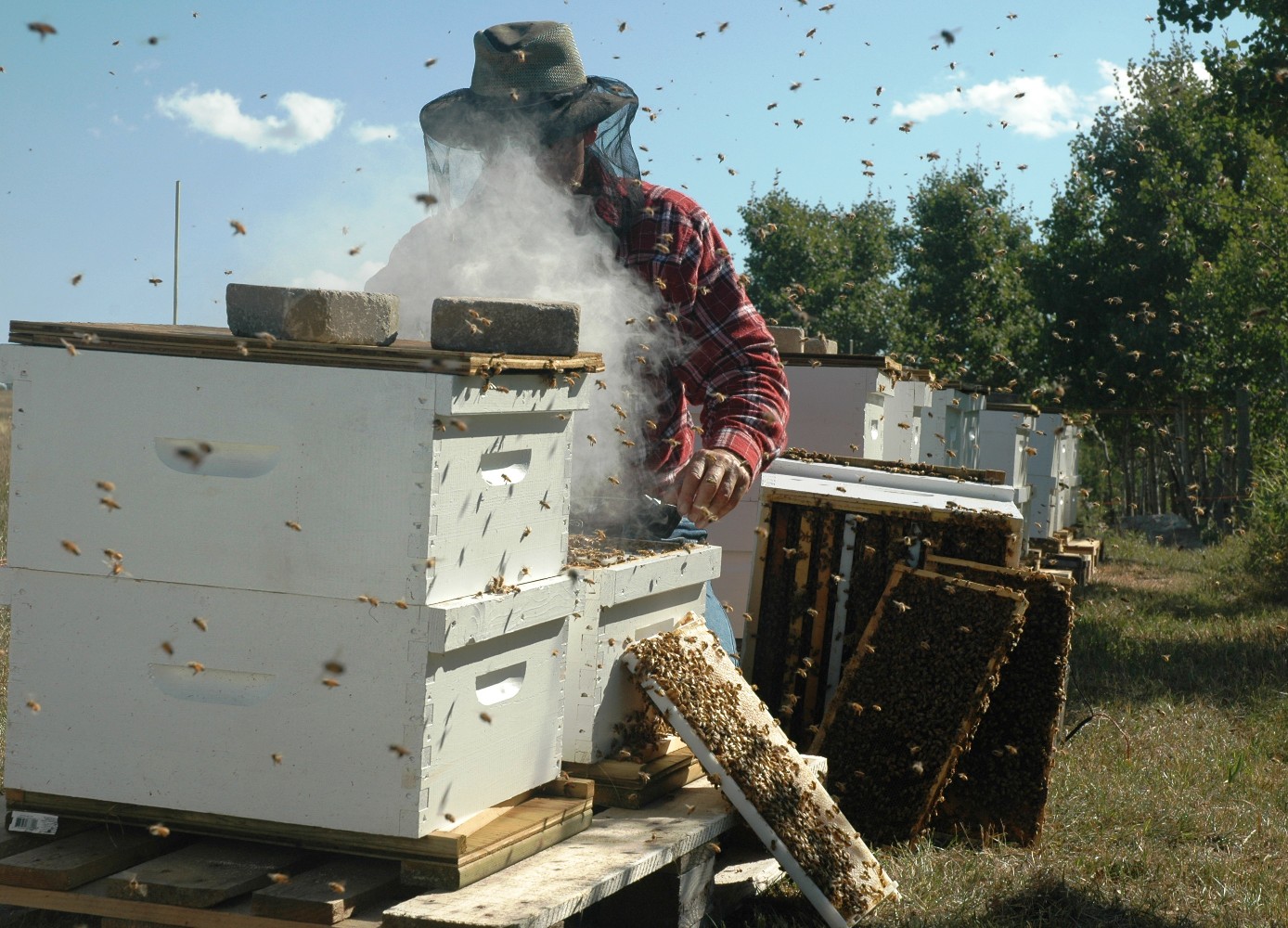
Work calmly and in a consistent order.
- Photograph the entrance and floor
Include dead bees, wax debris, wasps, mouse damage or unusual activity.
- Remove the roof and crownboard
Check for dead bees, mould, condensation and evidence of a cluster under the crownboard.
- Inspect the top bars and first frames
Look for stores, cluster position and any signs of damp or mould.
- Check brood frames carefully
Look for eggs, larvae, sealed brood, brood pattern, abnormal cappings, dead pupae and disease signs.
- Assess stores
Note whether honey or syrup stores are present, sealed, fermented, mouldy or accessible to where the cluster died.
- Look at the floor
Dead bees, varroa mites, wax debris, mouse droppings and chewed comb can all help diagnosis.
- Stop if you see suspicious brood disease
Close the hive, avoid further manipulation, mark it clearly and contact a bee inspector.
- Close and secure the hive
Prevent robbing by closing down entrances or sealing the hive if it is empty. Do not leave exposed comb in the apiary.
- Record the findings immediately
Add the suspected cause, confidence level, photos and next actions while the details are fresh.
What to do next, depending on the likely cause
If starvation is likely
If bees are still alive:
- Put fondant directly above the cluster.
- Reduce the entrance.
- Add insulation if appropriate and reduce draughts.
- Avoid breaking the cluster in cold weather.
- Recheck promptly when conditions allow.
If the colony is dead:
- Remove and secure usable sealed stores if there is no disease suspicion.
- Clean and store equipment properly.
- Review autumn feeding records and late-winter hefting.
- Check neighbouring colonies for low stores.
If foulbrood or serious brood disease is suspected

- Stop the inspection.
- Do not shake bees, scrape comb or move frames around.
- Do not transfer equipment to another hive or site.
- Photograph suspicious brood if you can do so without further disturbance.
- Mark the hive clearly.
- Contact your local bee inspector and follow their instructions.
For confirmed AFB, destruction of infected combs and bees is usually required, with sterilisation or destruction of equipment as directed. EFB management depends on severity, season and inspector guidance. Do not attempt to manage either disease casually or privately without proper advice.
If varroa and virus collapse is suspected
- Review mite monitoring and treatment dates.
- Check other colonies in the apiary.
- Avoid moving brood comb into healthy colonies.
- Dispose of old or suspect brood comb.
- Treat remaining colonies if monitoring and the season indicate it, using authorised products correctly.
- Record the failure so you can adjust next year’s varroa plan.
A common lesson from varroa deadouts is that treatment was too late. Winter bees are raised in late summer and autumn; if mite pressure is high then, the colony may collapse months later.
If pesticide poisoning is suspected
- Photograph dead bees and the wider site.
- Record time, date, weather and nearby flowering crops.
- Note any known spraying or chemical use.
- Avoid moving contaminated comb or honey.
- Contact your bee inspector or local association quickly.
- Follow official guidance on sampling and reporting.
Evidence deteriorates quickly, so early reporting matters.
If robbing is active
- Reduce entrances on all vulnerable colonies.
- Close gaps in boxes and crownboards.
- Remove exposed comb and spilled syrup.
- Avoid open feeding during robbing risk.
- Consider uniting a very weak but healthy colony with a stronger one.
- Recheck the apiary for wasps and other weak colonies.
Never leave deadout frames open “for the bees to clean up”. It encourages robbing and can spread disease.
Salvaging frames, stores and equipment
The safest rule is simple: salvage only when you have a reasonable explanation and no disease concern.
Stores
Sealed honey or syrup stores from a non-diseased deadout can often be used to support other colonies. Store them securely in bee-tight boxes or a freezer.
Do not use stores if:
- Foulbrood is suspected
- Pesticide contamination is possible
- The frames are badly soiled or mouldy
- The colony had an unexplained collapse affecting several hives
- You are not confident in the diagnosis
Do not extract honey for human consumption from suspect deadouts, especially if contamination or treatments are uncertain.
Drawn comb
Clean drawn comb is valuable, but old brood comb can harbour residues, spores and pests. If there is no disease concern, good drawn comb may be reused after freezing to control wax moth. Freezing for at least 48 hours is commonly used; longer is sensible for thick stacks or domestic freezers that cool slowly.
Replace old, dark brood comb regularly. Many beekeepers aim to renew brood comb on a rolling cycle so that no comb remains in heavy use for too many years.
Brood frames
Brood frames from deadouts deserve more caution than honey frames. If there is any suspicion of foulbrood, do not reuse them. If the comb is old, dark, mouldy, pest-damaged or associated with a varroa-virus collapse, melting down or destruction is often the better choice.
Wooden boxes and floors
Woodenware can often be cleaned and reused if there is no notifiable disease issue. Scrape off wax and propolis, then disinfect appropriately. Scorching with a blowtorch is commonly used on sound wooden boxes, taking care to treat corners and joints.
For suspected or confirmed foulbrood, follow the bee inspector’s instructions. Some equipment may be sterilised, but combs and frames are commonly destroyed in serious cases.
Metal and plastic parts
Roofs, queen excluders, mesh floors, feeders and plastic components can often be cleaned and disinfected if disease is not suspected. Use methods appropriate to the material. Heat that is safe for metal may damage plastic.
Disposal of a dead colony
For notifiable disease, follow the bee inspector’s instructions exactly.
For non-notifiable deadouts:
- Seal the hive to prevent robbing.
- Remove dead bees and unusable comb promptly.
- Burn or securely dispose of suspect comb.
- Melt down clean wax if suitable.
- Store reusable frames and boxes bee-tight.
- Freeze valuable comb before storage where wax moth is a risk.
Do not leave comb, honey or dead brood exposed in the apiary. It attracts robbers, wasps and wax moth, and it increases the risk of spreading pathogens.
When to call a bee inspector or ask for help
Contact a bee inspector promptly if:
- You suspect AFB or EFB
- Brood cappings are sunken, perforated or abnormal
- Larvae look melted, twisted, ropy or discoloured
- Several colonies die suddenly
- You suspect pesticide poisoning
- You find symptoms you cannot identify
- You are new to beekeeping and unsure whether comb is safe to reuse
In England and Wales, the National Bee Unit and BeeBase are the usual starting points for bee inspector contact and disease guidance. Local associations are also valuable, especially for arranging an experienced beekeeper to look at photographs or visit when appropriate.
Deadout record-keeping checklist
For every deadout, record:
- Hive ID and apiary location
- Date and time
- Weather and recent weather pattern
- Colony history and queen age, if known
- Last inspection notes
- Last feeding date and amount
- Last varroa count and treatment
- Hive weight or hefting impression
- Dead bees at the entrance or inside
- Presence or absence of live bees
- Eggs, larvae and sealed brood findings
- Brood pattern and any abnormal cappings
- Stores present and whether accessible
- Signs of robbing, wasps, mice or wax moth
- Smell or suspected contamination
- Photographs taken
- Likely cause and confidence level
- Equipment salvaged, destroyed or isolated
- Follow-up action and inspection date
Bee Hive Tracker can help keep these details tied to the correct hive and season. Over time, records show whether losses are isolated or part of a pattern, such as late varroa treatment, underfeeding, queen age, poor apiary position or recurring robbing pressure.
Quick decision guide
Use this as a practical field summary.
If there are lots of dead bees outside and possible chemical exposure: Photograph, record details, avoid disturbing evidence and contact your bee inspector or association.
If the hive is light and bees are dead head-first in cells: Starvation is likely. Check neighbouring hives for stores and improve feeding or emergency fondant use.
If honey is present but away from a small dead cluster: The colony may have starved during cold weather because stores were inaccessible. Review winter stores arrangement and late-winter checks.
If brood cappings are sunken, perforated or greasy: Suspect foulbrood. Stop, close the hive and contact a bee inspector.
If the colony dwindled after high mite counts or late treatment: Varroa-virus collapse is likely. Review the apiary-wide varroa plan and be cautious with comb reuse.
If comb is torn and honey has disappeared: Robbing is likely, either as a cause or after death. Reduce entrances and secure all exposed comb.
If the hive is empty with no dead bees and stores remain: Consider absconding, queen failure, robbing after collapse or an earlier undetected problem. Inspect carefully before reusing equipment.
Preventing future deadouts
You cannot prevent every colony loss, but most apiaries can reduce deadouts with consistent management.
- Check stores in late summer, autumn and late winter.
- Heft colonies during winter when full inspections are not appropriate.
- Feed early enough for colonies to process stores before cold weather.
- Monitor varroa rather than relying only on habit or dates.
- Treat varroa in time to protect winter bees.
- Replace failing queens before colonies dwindle badly.
- Renew old brood comb on a planned cycle.
- Keep entrances defensible during wasp and robbing season.
- Avoid leaving syrup, comb or honey exposed.
- Keep equipment clean and avoid unnecessary frame movement between apiaries.
- Learn foulbrood signs before you need to recognise them.
- Build a relationship with your local association and bee inspector.
Follow-up after a deadout
A deadout is not finished when the hive is closed. Recheck the apiary within a week, especially if the cause is uncertain.
Look at neighbouring colonies for:
- Low stores
- Robbing pressure
- Deformed-winged bees
- Patchy brood
- Queen problems
- Unusual numbers of dead bees
- Wasps or pests
- Similar symptoms developing
Update your records with the final outcome: cause, action taken, equipment reused, frames destroyed, stores saved and any inspector advice. Set reminders for comb replacement, extra varroa monitoring, feeding checks or follow-up inspections.
Deadouts are unpleasant, but they are manageable when approached methodically. Observe first, photograph, inspect carefully, avoid spreading risk, and call for help when disease or poisoning is possible. The combination of good hygiene, accurate diagnosis and reliable records turns a colony loss into practical information that can protect the rest of the apiary.
Sources Used
- https://secure.fera.defra.gov.uk/beebase/index.cfm (BeeBase / National Bee Unit)
- https://www.bbka.org.uk (British Beekeepers Association)
- https://www.gov.uk/government/organisations/animal-and-plant-health-agency (Animal and Plant Health Agency / National Bee Unit)